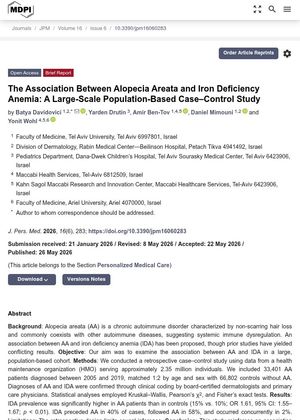
 February 2025 in “PubMed”
 Alopecia areata cases have increased globally, affecting mostly women aged 30-34, with links to other health issues.
63 citations
,
July 2024 in “Journal of the American Academy of Dermatology” Deuruxolitinib effectively promotes hair regrowth in adults with alopecia areata.
227 citations
,
April 2023 in “The Lancet” Ritlecitinib effectively treats alopecia areata and is well-tolerated.
 20 citations
,
March 2023 in “American Journal of Clinical Dermatology”
20 citations
,
March 2023 in “American Journal of Clinical Dermatology” Baricitinib improved severe hair loss in adults over 52 weeks and was safe to use.
18 citations
,
November 2022 in “The Journal of Dermatology” Alopecia areata affects 1.45% of people in Japan, impacting mood and self-esteem, with many not seeking treatment.
 100 citations
,
July 2018 in “Journal of The American Academy of Dermatology”
100 citations
,
July 2018 in “Journal of The American Academy of Dermatology” People with alopecia areata often have other health issues like skin diseases, metabolic syndrome, stomach infections, lupus, anemia, thyroid problems, mental health issues, vitamin D deficiency, and hearing and eye problems.
51 citations
,
December 2017 in “Skin Appendage Disorders” Stress may trigger hair loss by affecting immune protection in hair follicles.
 99 citations
,
July 2017 in “Clinical Reviews in Allergy & Immunology”
99 citations
,
July 2017 in “Clinical Reviews in Allergy & Immunology” New treatments for Alopecia Areata show promise but need to be more effective and affordable.
 176 citations
,
August 2015 in “The journal of allergy and clinical immunology/Journal of allergy and clinical immunology/The journal of allergy and clinical immunology”
176 citations
,
August 2015 in “The journal of allergy and clinical immunology/Journal of allergy and clinical immunology/The journal of allergy and clinical immunology” Alopecia areata involves immune activation in the scalp, suggesting treatments targeting TH1, TH2, and IL-23 pathways.
 144 citations
,
July 2015 in “Clinical, Cosmetic and Investigational Dermatology”
144 citations
,
July 2015 in “Clinical, Cosmetic and Investigational Dermatology” Alopecia areata is a common autoimmune disease affecting about 2% of people, causing significant disability and often associated with mental health issues and other autoimmune conditions.
110 citations
,
December 2013 in “The journal of investigative dermatology. Symposium proceedings/The Journal of investigative dermatology symposium proceedings” Alopecia areata is a genetic and immune-related hair loss condition that is often associated with other autoimmune diseases and does not typically cause permanent damage to hair follicles.
21 citations
,
January 2009 in “Indian journal of dermatology, venereology, and leprology” Vitamin B12, folate, ferritin, and iron levels are not linked to alopecia areata.
 207 citations
,
April 2006 in “Journal of The American Academy of Dermatology”
207 citations
,
April 2006 in “Journal of The American Academy of Dermatology” Iron deficiency may be related to hair loss, but there's not enough evidence to recommend iron screening or supplements for all hair loss patients.
 163 citations
,
November 2003 in “Journal of Investigative Dermatology”
163 citations
,
November 2003 in “Journal of Investigative Dermatology” Low iron levels may be linked to some types of hair loss in women.