Alopecia
January 1991
in “
Journal of Pediatric Health Care
”
TLDR Hair loss in children can be caused by fungal infections, trauma, autoimmune disorders, or stress, and treatments vary depending on the cause.
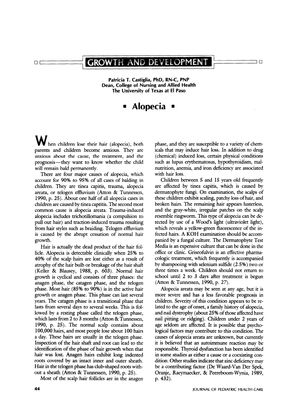
The document from 1991 discusses the causes, characteristics, and treatments of alopecia in children, noting that hair loss can cause significant anxiety for both children and parents. It identifies four major causes of alopecia in children, which are tinea capitis, trauma, alopecia areata, and telogen effluvium, with tinea capitis being the most common. The document describes the normal hair growth cycle, which includes the anagen, catagen, and telogen phases, and explains that alopecia becomes clinically detectable when 25% to 40% of scalp hairs are lost. It also mentions that certain physical conditions and chemicals can induce hair loss. Tinea capitis is highlighted as a fungal infection treatable with griseofulvin and selenium sulfide shampoo, while alopecia areata, which may be autoimmune in nature, has no recommended treatment, although some success has been seen with topical corticosteroids and minoxidil. Trauma-induced hair loss, such as trichotillomania, may require psychological consultation and behavioral strategies. The document also touches on hair loss due to chemotherapy and the importance of nurses being aware of the various causes and treatments of alopecia to support children and their families in maintaining a positive self-image.