The Relationship Among Androgens, Insulin Resistance, and Ghrelin Polymorphisms in Post-Adolescent Male Patients with Severe Acne Vulgaris
January 2020
in “
Advances in Dermatology and Allergology
”
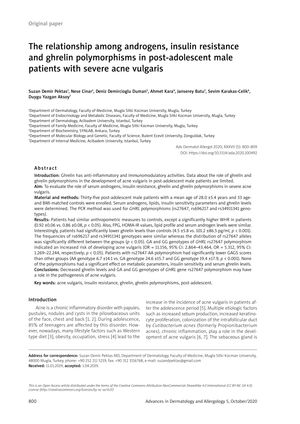
TLDR Lower ghrelin levels and certain gene variations may increase acne risk.
The study examined the role of serum androgens, insulin resistance, ghrelin, and ghrelin polymorphisms in 35 post-adolescent male patients with severe acne vulgaris compared to 33 controls. It found that patients had significantly lower ghrelin levels and that the GA and GG genotypes of the GHRL gene rs27647 polymorphism were linked to an increased risk of acne vulgaris. However, these polymorphisms did not significantly affect metabolic parameters or insulin sensitivity. The findings suggested that decreased ghrelin levels and specific GHRL gene polymorphisms might contribute to the pathogenesis of acne vulgaris, although traditional metabolic markers were not significantly different in this cohort. Further large population-based studies were recommended to better understand these associations.