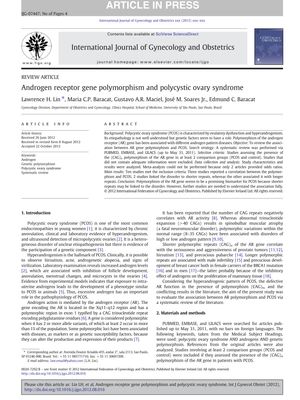
TLDR The conclusion is that androgen receptor gene polymorphism might be a marker for polycystic ovary syndrome, but more research is needed.
The document reviewed the potential link between androgen receptor (AR) gene polymorphism and polycystic ovary syndrome (PCOS), analyzing 10 studies with a total of 1508 PCOS patients and 1623 controls. It found that three studies reported a correlation between AR gene polymorphism and PCOS, with two indicating an association with shorter CAG repeats and one with longer repeats. However, due to methodological differences and insufficient data for a meta-analysis, the review concluded that while AR gene polymorphism could be a promising biomarker for PCOS, more research with larger, more consistent study designs is necessary to clarify this relationship.
 991 citations
,
January 2011 in “Nature Reviews Endocrinology”
991 citations
,
January 2011 in “Nature Reviews Endocrinology” The document concludes that PCOS is a complex disorder caused by both genetic and environmental factors, affecting women's health in various ways, and requires personalized treatment.
15 citations
,
August 2010 in “Fertility and sterility” Metformin works better for adolescent girls with PCOS who have certain genetic variations.
 1540 citations
,
October 2008 in “Fertility and Sterility”
1540 citations
,
October 2008 in “Fertility and Sterility” The report concludes that PCOS is mainly a condition of excess male hormones and its definition may change as new information is discovered.
 44 citations
,
January 2008 in “Fertility and Sterility”
44 citations
,
January 2008 in “Fertility and Sterility” Longer CAG repeat lengths in the androgen receptor gene are linked to higher testosterone levels in women with PCOS.
 37 citations
,
January 2008 in “Gynecological Endocrinology”
37 citations
,
January 2008 in “Gynecological Endocrinology” Shorter CAG repeats in a specific gene may increase male hormone activity and symptoms like acne and excess hair in women with PCOS.
 253 citations
,
March 2006 in “The Journal of Clinical Endocrinology and Metabolism”
253 citations
,
March 2006 in “The Journal of Clinical Endocrinology and Metabolism” Exposure to too much androgen before birth might cause polycystic ovary syndrome later in life.
 4025 citations
,
December 2003 in “Human Reproduction”
4025 citations
,
December 2003 in “Human Reproduction” The 2003 consensus updated PCOS diagnosis criteria and linked PCOS to higher risks of diabetes and heart problems, recommending lifestyle changes to lower these risks.