Balance Beam Alopecia

    June 1978 in “ Archives of Dermatology
    Pamela Ely
    TLDR Hair loss was likely caused by gymnastics activities on a balance beam.
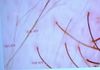
    The document described a case of a young woman experiencing hair loss in a linear pattern from the frontal scalp to the occiput. Upon examination, there were no microscopic abnormalities or scalp issues, and the patient initially denied any traction-related causes. However, it was later revealed that the hair loss was associated with the use of a balance beam, a gymnastics apparatus, where repeated headstands and rollovers likely caused traction alopecia. The patient's hair began to regrow after she ceased using the balance beam.

    Discuss this study in the Community →

    Related Community Posts Join

    6 / 124 results

      community Occipitalis Muscle Tension Theory

      in Treatment  8 upvotes 2 weeks ago
      Scalp tension from the occipitalis muscle is theorized to contribute to hair loss, but most believe DHT and genetics are the main causes. Treatments like finasteride and minoxidil are considered more effective than addressing scalp tension.

      community I am a dermatologist with a clinical interest in alopecia. AMA

      in Will treatment work for me? 3 years ago
      In this conversation, 4990 discussed various treatments for hair loss, including oral minoxidil, PRP, transplan, Jak inhibitors, Dutasteride, Finasteride, Olumiant, Ketoconazole, RU58841, microneedling, baricitinib, and CCCA. They recommended scalp biopsies in unclear cases of DUPA, twice weekly to twice daily shampooing for topical minoxidil users, and two sessions spaced one month apart with follow up at month three to determine the effectiveness of PRP treatment.

      community How I started reversing Male Pattern Baldness naturally ?

      in Question  7 upvotes 8 years ago
      The user reversed male pattern baldness using a pro-thyroid diet, lifestyle changes, and scalp stimulation exercises, without Minoxidil or Finasteride. They reported reduced dandruff, itchiness, oiliness, and experienced hair regrowth and thickening over 15 months.

      community An updated, simple guide to the most effective hair loss treatments

       193 upvotes 6 years ago
      Effective treatments for hair loss, including Dutasteride, Finasteride, Minoxidil, Dermarolling, LLLT, PRP, Ketoconazole, and Scalp Massage. In addition, anti-inflammatory diets and stress management are recommended to maintain or regrow hair.

      community hmi115 is coming. Prepare yourselves for what's coming

      in Technology  109 upvotes 2 years ago
      The conversation discusses HMI-115, a potential cure for hair loss. Users share mixed opinions, with some expressing skepticism and others sharing anecdotal evidence of its effectiveness, including photos of significant hair regrowth from a trial participant.

    Similar Research

    5 / 1000+ results
      Histopathology of Non-Scarring Alopecia

      research Histopathology of Non-Scarring Alopecia

      122 citations , April 1995 in “Journal of Cutaneous Pathology”
      The document describes how to tell different types of non-scarring hair loss apart by looking at hair and scalp tissue under a microscope.
      Histopathologic Evaluation of Alopecias

      research Histopathologic Evaluation of Alopecias

      90 citations , June 2006 in “The American Journal of Dermatopathology”
      The document concludes that accurate diagnosis of different types of hair loss requires careful examination of hair and scalp tissue, considering both clinical and microscopic features.
      Alopecia And Its Medical Management

      research Alopecia And Its Medical Management

      May 2003 in “Facial Plastic Surgery Clinics of North America”
      Hair loss can be treated with medications like minoxidil and finasteride or surgery, but treatment effectiveness varies by alopecia type and accurate diagnosis is important.