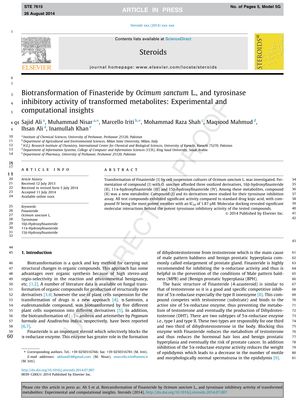
Biotransformation of Finasteride by Ocimum Sanctum L., and Tyrosinase Inhibitory Activity of Transformed Metabolites: Experimental and Computational Insights

    August 2014 in “ Steroids
    Sajid Ali, Muhammad Farrukh Nisar, Marcello Iriti, Mohammad Maroof Shah, Maqsood Mahmud, Ihsan Ali, Inamullah Khan
    Image of study
    TLDR Fermentation of Finasteride with Ocimum sanctum L. creates new metabolite that inhibits tyrosinase.
    The study found that the fermentation of Finasteride with Ocimum sanctum L. resulted in three oxidized derivatives, including a new metabolite, which exhibited significant tyrosinase inhibitory activity. The study suggests that biotransformation is a useful method for carrying out structural changes in organic compounds.

    Discuss this study in the Community →

    Research cited in this study

    3 / 3 results

    Related Community Posts Join

    6 / 1000+ results

      community Experience with Rootbiotec or Anagain

      in Treatment  1 upvotes 3 years ago
      The conversation discusses experiences with hair loss treatments containing RootBioTec and Anagain. Users share their results and compare these treatments to Minoxidil, finasteride, and RU58841.

      community (32M) Short-Term Progress Only with Min/Fin

      in Finasteride  117 upvotes 6 days ago
      A 32-year-old male experienced short-term hair regrowth with topical minoxidil, but thinning resumed. He switched to oral finasteride and minoxidil, saw initial improvement, but now faces aggressive thinning again and is considering other treatments like dutasteride, derma rollers, or red light caps.

      community Should I continue finasteride or quit?

      in Finasteride  99 upvotes 1 week ago
      A 19-year-old is considering whether to continue finasteride at 0.5mg every other day due to concerns about side effects. They are seeking advice on dosage frequency and potential side effects, noting no issues so far.

    Similar Research

    5 / 1000+ results