Cartilage to Bone Transformation During Fracture Healing Is Coordinated by the Invading Vasculature and Induction of the Core Pluripotency Genes

    January 2017 in “ Development
    Diane Hu, Federico Ferro, Frank Yang, Aaron Taylor, Wenhan Chang, Theodore Miclau, Ralph Marcucio, Chelsea S. Bahney
    Image of study
    TLDR Blood vessels and specific genes help turn cartilage into bone when bones heal.
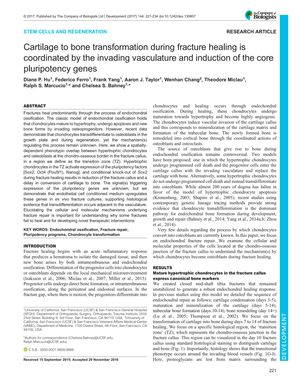
    The document from January 15, 2017, presents a study that investigated the role of core pluripotency genes (Sox2, Oct4, Nanog) in the transformation of cartilage to bone during fracture healing, with a focus on the involvement of the vasculature. The study utilized immunohistochemistry on wild-type mice (n>12) and found that these genes, which are typically associated with maintaining pluripotency in stem cells, were expressed in hypertrophic chondrocytes near the vasculature in the transition zone of the fracture callus. The study demonstrated that Sox2 is functionally important for fracture healing, as Sox2 knockout mice showed decreased callus size, bone, and vasculature volume. The findings suggest that the vasculature signals the activation of pluripotency genes in chondrocytes, which may then transdifferentiate into osteoblasts, challenging the traditional view that hypertrophic chondrocytes undergo apoptosis rather than contributing to new bone formation.

    Discuss this study in the Community →

    Related Community Posts Join

    6 / 14 results

      community This guy claims stem cells fixed his balding

      in Is this regrowth?  327 upvotes 2 years ago
      A man who claimed to have regrown his hair using stem cell treatment, sparking a debate about its effectiveness and cost. Some users suggested he might be using other treatments or substances, while others shared their own experiences with stem cell therapy for hair loss.

      community Please explain this Minoxidil phenomena

      in Minoxidil  58 upvotes 2 years ago
      The post discusses the difference in effects of Minoxidil (Min) on scalp and facial hair. The user questions why Min-induced hair growth on the scalp is temporary, while facial hair growth seems permanent, even after stopping Min. They propose theories, including different Min mechanisms on body and facial hair, the role of DHT, and the possibility of not achieving fully terminal hair. The responses include personal experiences and theories about Min's effects on hair growth.

      community A Theory on Why Microneedling Works

       170 upvotes 6 years ago
      Microneedling may enhance hair regrowth by transferring stem cells to dormant follicles, improving the effects of minoxidil. Users discuss using microneedling with needle lengths around 1.5mm to stimulate hair growth.

      community Fats on your Head to Stop Hair Loss?

      in Research/Science  138 upvotes 2 years ago
      The conversation discusses the potential of long-chain unsaturated fatty acids, like oleic and linoleic acid, as an additional treatment for hair loss, which may inhibit the enzyme responsible for converting testosterone to DHT and promote hair growth. Users humorously suggest using oils topically and discuss other hair loss treatments, but the main focus is on the science behind fatty acids and their role in hair health.

    Similar Research

    5 / 1000+ results