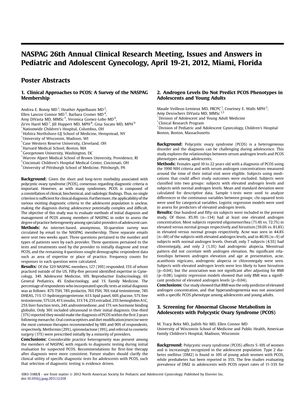
Clinical Approaches to PCOS: A Survey of the NASPAG Membership

    Andrea E. Bonny, Heather Appelbaum, Ellen L. Connor, Barbara A. Cromer, Amy D. DiVasta, Veronica Gomez-Lobo, Zeev Harel, Jill S. Huppert, Gina S. Sucato
    Image of study
    TLDR Doctors vary in how they initially test for PCOS, but most agree on using oral contraceptives and lifestyle changes as first treatments.
    In a survey conducted among members of the North American Society for Pediatric and Adolescent Gynecology (NASPAG) regarding clinical approaches to Polycystic Ovary Syndrome (PCOS), it was found that there was significant practice heterogeneity in the initial diagnostic testing for suspected PCOS. Out of 329 NASPAG members, 127 (39%) responded to the survey. The tests most commonly used at initial diagnosis included TSH (87%), prolactin (78%), FSH (76%), total testosterone (76%), and DHEAS (74%). Only 36% of respondents included ultrasound in their initial diagnosis, and 37% would make the diagnosis of PCOS within the first 2 years following menarche. Oral contraceptives and diet modification/exercise were the most common therapies, recommended by 98% and 90% of respondents, respectively. The study concluded that while there was a wide range of diagnostic tests used, the recommendations for first-line therapy after diagnosis were more consistent. The authors suggested that future studies should aim to clarify the clinical utility of specific diagnostic tests for adolescents with PCOS to ensure evidence-driven selection of diagnostic testing.

    Discuss this study in the Community →

    Related Community Posts Join

    6 / 138 results

      community C’est terrible - at my wits end

      in Female  450 upvotes 2 years ago
      A 29-year-old woman is experiencing gradual hair thinning since age 15, suspects Androgenic Alopecia, and has tried 5% minoxidil with little success. She has purchased various hair loss treatments including minoxidil, dutasteride, finasteride, and spironolactone, but is cautious about starting them due to potential interactions with her ADHD medication.

      community A rare case? Or a blind spot? Hair loss caused by low T + e2

      in Chat  10 upvotes 6 months ago
      Low testosterone and estradiol may contribute to hair loss, and blocking DHT without sufficient hormone levels might hinder regrowth. The discussion highlights the importance of hormone balance, with some considering supplements and lifestyle changes to support hair health.

      community 19f is my hair loss due to deficiencies?

      in Female  4 upvotes 2 weeks ago
      The conversation is about a 19-year-old female experiencing hair loss, potentially due to deficiencies in iron, ferritin, and vitamin D. She is considering iron and vitamin D supplementation and exploring dietary changes, while also planning to consult a dermatologist when possible.

      community I don’t know what to do at this point

      in Female  87 upvotes 10 months ago
      A 21-year-old woman with female pattern baldness has tried minoxidil, red light therapy, and supplements without success. She is considering spironolactone and seeking medical advice.

    Similar Research

    6 / 1000+ results