Utilization of Contraception Methods and Side Effects Among Women Attending the Maternal and Child Healthcare Centers in Mukalla City, Hadhramout, Yemen
November 2025
in “
Yemeni Journal For Medical Sciences
”
TLDR Many women using contraception in Mukalla, Yemen, experience side effects like hair loss and mood swings, needing personalized care.
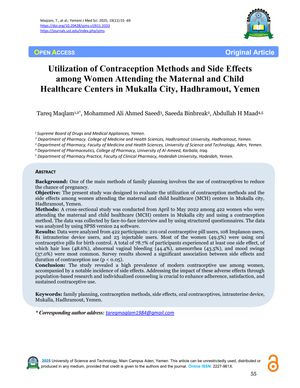
A study conducted in Mukalla city, Hadhramout, Yemen, involving 422 women attending maternal and child healthcare centers, evaluated the use of contraception methods and their side effects. The majority of participants (49.5%) used oral contraceptive pills, followed by implanon, intrauterine devices, and injectables. Notably, 78.7% of the women experienced at least one side effect, with hair loss (48.6%), abnormal vaginal bleeding (44.4%), amenorrhea (43.5%), and mood swings (37.0%) being the most common. The study found a significant association between the duration of contraceptive use and the occurrence of side effects. The findings highlight the need for individualized care and counseling to address these side effects and improve contraceptive behavior.