TLDR Polycystic Ovary Syndrome should be seen mainly as a condition of excess male hormones, with a focus on this in its definition.
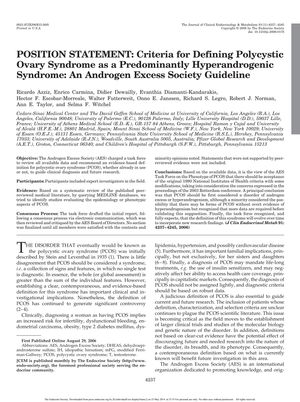
The Androgen Excess Society Task Force on PCOS recommended that Polycystic Ovary Syndrome should be primarily considered a disorder of androgen excess, and that the definition of PCOS should emphasize hyperandrogenism as a central feature. They proposed modifications to the 1990 NIH criteria for PCOS, informed by discussions from the 2003 Rotterdam conference. The task force identified nine different PCOS phenotypes based on various combinations of ovulatory dysfunction, hirsutism, hyperandrogenemia, and polycystic ovaries. They found strong evidence of increased metabolic dysfunction risk in women with phenotypes showing hirsutism and/or hyperandrogenemia. The recommendations were based on a systematic review of literature, prioritizing studies with over 100 subjects, and a consensus process with international experts. The task force noted that the definition of PCOS might change with new research and that women with PCOS symptoms should be treated even if they do not meet the full diagnostic criteria.

352 citations
,
January 2006 in “The Journal of Clinical Endocrinology and Metabolism” Most women referred for excess male hormone symptoms had polycystic ovary syndrome (PCOS), with other conditions being less common.
414 citations
,
August 2005 in “The Journal of Clinical Endocrinology and Metabolism” Polycystic ovary syndrome costs the U.S. over $4 billion a year, mainly from treating related health issues.
947 citations
,
February 2004 in “The Journal of Clinical Endocrinology and Metabolism” Most women with excess male hormones have Polycystic Ovary Syndrome, and hormonal therapy can improve symptoms but may cause side effects.
4809 citations
,
January 2004 in “Fertility and Sterility” The 2003 consensus updated PCOS diagnosis criteria and highlighted increased risks of diabetes and heart disease for those affected.
4025 citations
,
December 2003 in “Human Reproduction” The 2003 consensus updated PCOS diagnosis criteria and linked PCOS to higher risks of diabetes and heart problems, recommending lifestyle changes to lower these risks.
84 citations
,
November 2003 in “European journal of endocrinology” Women with androgenic alopecia are more likely to have polycystic ovaries and higher androgen levels, which may indicate PCOS.
135 citations
,
August 1994 in “Clinical Endocrinology” Most women with hirsutism or androgenic alopecia had polycystic ovaries, especially if they had irregular periods.
1265 citations
,
October 2013 in “The Journal of Clinical Endocrinology and Metabolism” The guideline suggests using specific criteria to diagnose PCOS, recommends various treatments for its symptoms, and advises screening for related health issues.
May 2019 in “Paediatrics and child health” The document concludes that personalized treatment, including lifestyle changes and medication, is essential for managing PCOS in teenagers, while also addressing their psychological well-being.
40 citations
,
April 2008 in “European journal of endocrinology” Metformin and rosiglitazone both improved insulin use and hormonal symptoms in women with PCOS.
30 citations
,
June 2019 in “Frontiers in Endocrinology” The document concludes that managing non-classical congenital adrenal hyperplasia in females requires personalized treatment, genetic counseling, and a team of specialists.
6 citations
,
April 2019 in “Journal of Pediatric Endocrinology and Metabolism” Metformin improved menstrual cycle regularity and signs of hyperandrogenism in adolescent girls with type 1 diabetes but did not improve blood sugar control.