TLDR DA-MeHA hydrogel effectively aids stem cell-based skin regeneration.
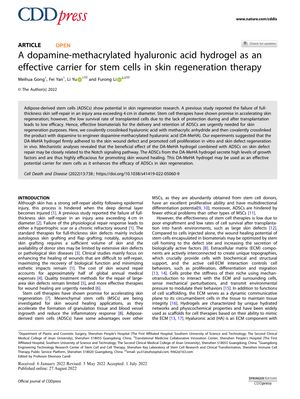
The study explored the use of a dopamine-methacrylated hyaluronic acid (DA-MeHA) hydrogel as a carrier for adipose-derived stem cells (ADSCs) in skin regeneration therapy. In experiments with 40 mice, the DA-MeHA hydrogel encapsulating ADSCs significantly improved wound healing, skin regeneration, and neovascularization compared to other treatments. The hydrogel supported ADSC proliferation, enhanced skin remodeling, and modulated inflammation through Notch signaling. It also facilitated the formation of new hair follicles and reduced proinflammatory cytokines. The study concluded that DA-MeHA hydrogel could be an effective carrier for stem cells, offering a promising tool for skin regeneration therapy, though further research was needed to confirm its clinical applicability.

19 citations
,
August 2019 in “Journal of Cellular Biochemistry” ADSCs help protect skin from UV damage and aging.
1160 citations
,
November 2018 in “Physiological Reviews” The document concludes that better targeted treatments are needed for wound healing, and single-cell technologies may improve cell-based therapies.
113 citations
,
June 2015 in “Stem Cell Research & Therapy” Wnt and Notch signaling help wound healing by promoting cell growth and regulating cell differentiation.
426 citations
,
August 2014 in “Nature Medicine” Skin stem cells interacting with their environment is crucial for maintaining and regenerating skin and hair, and understanding this can help develop new treatments for skin and hair disorders.
1235 citations
,
December 2013 in “Nature” Two fibroblast types shape skin structure and repair differently.
253 citations
,
April 2008 in “Current opinion in cell biology” Notch signalling helps skin cells differentiate and prevents tumors.
1 citations
,
February 2024 in “Journal of nanobiotechnology” Hydrogels combined with extracellular vesicles and 3D bioprinting improve wound healing.
10 citations
,
March 2024 in “Frontiers in Bioengineering and Biotechnology” Photothermal hydrogels can kill bacteria and help heal tissue using light-converted heat.
76 citations
,
February 2024 in “International Journal of Molecular Sciences” Hydrogels show promise for improving skin wound healing.
12 citations
,
September 2023 in “Polymers” The hydrogel speeds up skin wound healing effectively.
More research is needed to confirm the potential of various treatments, including Helichrysum plicatum, vitamins, bromelain, personalized medications, hydrogels, and bacteriophage therapy.