TLDR Certain drugs can cause male infertility, so fertility counseling and sperm preservation are advised.
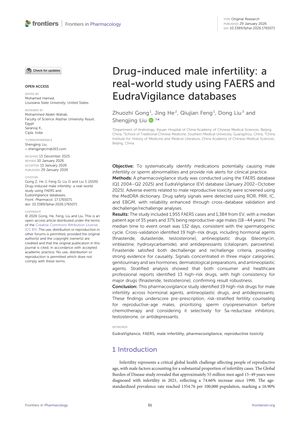
This pharmacovigilance study analyzed data from the FAERS and EudraVigilance databases to identify 19 high-risk drugs potentially causing male infertility or sperm abnormalities. The study included 1,955 cases from FAERS and 1,384 from EudraVigilance, with a median patient age of 35 years. The drugs identified fall into categories such as hormonal agents (e.g., finasteride, testosterone), antineoplastic drugs (e.g., bleomycin), and antidepressants (e.g., citalopram). Finasteride showed strong evidence for causality through dechallenge and rechallenge criteria. The findings highlight the importance of fertility counseling for reproductive-age males, suggesting sperm cryopreservation before chemotherapy and considering it for certain medications like 5α-reductase inhibitors and antidepressants.

March 2025 in “Daehan saengsik uihak hoeji/Clinical and experimental reproductive medicine” Long-term use of dutasteride for hair loss may harm semen quality.
October 2023 in “Toxicology and Applied Pharmacology” Finasteride is more harmful to male reproductive health than minoxidil.
39 citations
,
January 2019 in “The World Journal of Men's Health” Testosterone replacement therapy can prevent men from fathering children and should not be used by those wanting to stay fertile.
1 citations
,
January 2011 in “Journal of Human Reproductive Sciences” Finasteride may decrease semen quality but not harm sperm production, and stopping the drug can improve semen quality; hyperprolactinemia can cause infertility but is treatable with medication.
77 citations
,
June 2015 in “Nature Reviews Urology” Some common medications can harm male fertility, but many effects can be reversed.
8 citations
,
January 2017 in “Fertility and Sterility” Urologic diseases and treatments in older men can negatively affect fertility, and doctors should talk to patients about this.
1 citations
,
November 2005 in “Journal of Andrology” The meeting highlighted promising genetic treatments for male fertility issues but noted concerns about certain cancer risks and ICSI safety.
January 2025 in “Applied Sciences” Sulforaphane from broccoli may help treat certain cancers, hormone issues, and hair loss.
June 2022 in “Journal of Experimental Biology and Agricultural Sciences” Higher testosterone harms sperm motility, while higher estradiol improves sperm survival.