TLDR Equilibrium dialysis can accurately measure testosterone levels when lab results are inconsistent.
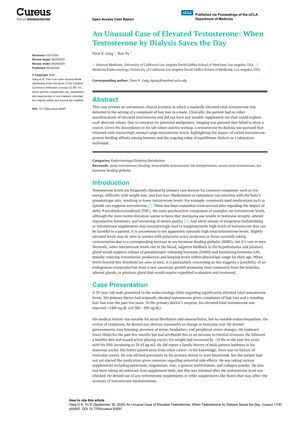
This case study discusses a male patient with an unusually high total testosterone level, detected during an evaluation for hair loss. Despite the elevated testosterone, the patient showed no other symptoms and had no history of supplement use. Imaging was conducted to rule out malignancy but revealed no source for the elevated levels. The discrepancy in lab results led to the use of testosterone by dialysis, which showed normal testosterone levels. This case underscores the importance of considering testosterone-protein binding affinity variations and demonstrates the utility of equilibrium dialysis in accurately assessing testosterone levels.

3 citations
,
February 2025 in “Endocrine” Confirm testosterone levels with advanced tests to avoid unnecessary procedures.
10 citations
,
November 2018 in “Physiological Research” The conclusion is that standardizing testosterone measurement methods is essential for better diagnosis accuracy in women.
16 citations
,
February 2018 in “European Journal of Endocrinology” Diagnosing hyperandrogenism in women is complex and requires accurate testing methods and consideration of SHBG levels.
77 citations
,
June 2006 in “Best Practice & Research Clinical Endocrinology & Metabolism” The document concludes that accurate measurement of serum androgens is crucial for diagnosing hyperandrogenism.
23 citations
,
August 2005 in “Expert opinion on pharmacotherapy” New treatments for low male hormones improved sexual function and mood but had unclear risks, especially for older men.
6 citations
,
September 2005 in “Expert Opinion on Pharmacotherapy” Androgen therapy can help with symptoms like low libido in women, but more research is needed to understand its long-term safety and effects on health.