H3K9me3 Controls Epidermis Morphogenesis by Regulating RNA Polymerase II Dynamics at Developmental Promoters and Enhancers
May 2026
in “
Nature Communications
”
H3K9me3 epidermis morphogenesis RNA Pol II histone methyltransferases Suv39h1 Suv39h2 Setdb1 keratinocyte differentiation skin barrier formation hair follicle development Merkel cell specification single-cell transcriptomics gene expression control skin organogenesis RNA polymerase II histone modification skin development hair growth skin barrier cell differentiation
TLDR H3K9me3 is crucial for proper skin development and structure.
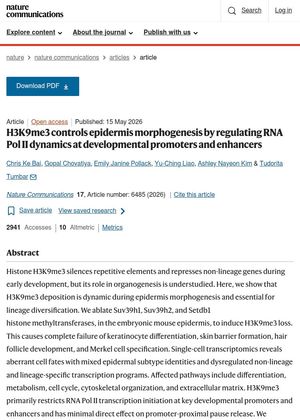
The study explores the role of H3K9me3 in epidermal morphogenesis, demonstrating its crucial function in regulating RNA Pol II dynamics at developmental promoters and enhancers. Using a mouse model with a triple knockout of histone methyltransferases responsible for H3K9me3 formation, the research found that the absence of H3K9me3 leads to significant defects in epidermal development, including impaired stratification, reduced epidermal thickness, and disrupted hair follicle and Merkel cell formation. H3K9me3 is essential for controlling cell adhesion, differentiation, proliferation, and metabolism during skin development by repressing non-lineage genes and orchestrating keratinocyte subtype-specific programs. The study highlights H3K9me3's role in maintaining epidermal lineage integrity and suggests its developmental role supports the complexity of mammalian organogenesis.