Hair Cortisol Measurements in the Evaluation of Cushing's Syndrome

    May 2016 in “ Endocrine Abstracts
    Mihail Zilbermint, Aaron Hodes, Ninet Sinaii, Elena Belyavskaya, Charalampos Lyssikatos, Jerrold S. Meyer, Maya Lodish, Constantine A. Stratakis
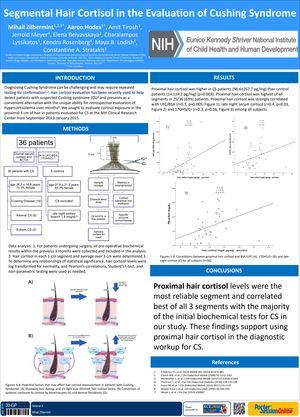
    Image of study
    TLDR Proximal hair cortisol is a reliable tool for diagnosing Cushing's Syndrome.
    The study evaluated the use of proximal hair cortisol measurements in diagnosing Cushing's Syndrome (CS) and found that these measurements were higher in CS patients compared to controls. The study involved 36 patients, including 30 with CS and 6 controls. Proximal hair cortisol levels showed strong correlations with other biochemical tests for CS, suggesting that they could be a reliable diagnostic tool. The findings supported the use of proximal hair cortisol in the diagnostic workup for CS, despite potential factors like shampoo, hair dyeing, and UV light that might affect measurements.

    Discuss this study in the Community →

    Related Community Posts Join

    6 / 200 results

      community Low cortisol it is due the fin

      in Finasteride/Dutasteride  7 upvotes 5 months ago
      The user has been taking 1mg finasteride daily for a year with no improvement in hair loss and reports low cortisol levels, sleep issues, and anxiety changes. The conversation includes discussions on the potential effects of finasteride on cortisol and neurosteroids, with suggestions to consult a doctor and consider other factors.

      community [25, F] [RANT] Shedding since March 2020. This just isn’t fair.

      in Female  42 upvotes 4 years ago
      User "missbloombastic" has been experiencing hair loss since 2016 and tried min, fin, multivitamins, and spiro with mixed results. Another user shares their struggle with hair loss and its impact on self-esteem, while a third user suggests checking blood tests and confirming the cause of hair loss.

      community C’est terrible - at my wits end

      in Female  450 upvotes 2 years ago
      A 29-year-old woman is experiencing gradual hair thinning since age 15, suspects Androgenic Alopecia, and has tried 5% minoxidil with little success. She has purchased various hair loss treatments including minoxidil, dutasteride, finasteride, and spironolactone, but is cautious about starting them due to potential interactions with her ADHD medication.

      community I have not seen a single person who claims dutasteride destroyed their hair post a picture of the before/after

      in Finasteride/Dutasteride  123 upvotes 1 year ago
      The conversation discusses skepticism around claims that dutasteride worsens hair loss, with some users suggesting misinformation or panic during shedding as reasons for such claims. One user shared their negative experience with dutasteride, including increased sebum production and hair loss, and is now considering a higher dose of oral minoxidil after stopping dutasteride.

    Similar Research

    5 / 1000+ results
      Toward a Diagnostic Score in Cushing's Syndrome

      research Toward a Diagnostic Score in Cushing's Syndrome

      42 citations , November 2019 in “Frontiers in Endocrinology”
      The document suggests creating a validated score to diagnose Cushing's Syndrome and considers plasma steroid profiling as a simpler diagnostic method.
      Endocrinology

      research Endocrinology

      April 2023 in “Clinical Chemistry and Laboratory Medicine”
      The document concludes that inflammation markers can be used in diabetes, vitamin D3 affects immune pathways, hyperthyroidism changes hormone levels, androgen levels help diagnose Adrenocortical Carcinoma, erectile dysfunction is linked to diabetes, hypogonadism is common in HIV-infected males, and hormones can be biomarkers for various conditions.
      Endocrine Disorders and Infertility

      research Endocrine Disorders and Infertility

      1 citations , March 2011 in “Infertility”
      Hormone imbalances from the pituitary, thyroid, and adrenal glands can cause infertility, but treating these disorders can improve fertility.
      Hirsutism

      research Hirsutism

      12 citations , May 2005 in “Current obstetrics and gynaecology/Current obstetrics & gynaecology”
      Hirsutism is too much hair growth in women like the pattern in men, often caused by high male hormones, and can be treated with hormone control and hair removal methods.