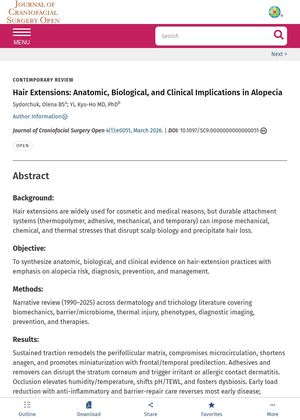
TLDR Hair extensions can damage scalp health and cause hair loss, especially with prolonged use.
Hair extensions can negatively impact scalp health, especially in those with thinning hair, by causing traction alopecia, follicular stress, and barrier injury through various attachment methods like thermopolymer, adhesive, mechanical, and temporary. Adhesives may lead to allergic reactions and barrier disruption, while thermal bonding can harm hair fibers. Prolonged use can alter the scalp's microbiome, increasing inflammation. Preventive measures include limiting extension weight, using less sensitizing adhesives, and maintaining proper scalp care. Early intervention with strategies like reducing traction and applying anti-inflammatory treatments is essential to prevent irreversible damage.
 1 citations
,
June 2023 in “Journal of Cosmetic Dermatology”
1 citations
,
June 2023 in “Journal of Cosmetic Dermatology” Exosome treatment for hair growth is promising but not FDA-approved and needs more research on safety and how it works.
 60 citations
,
April 2018 in “Clinical, cosmetic and investigational dermatology”
60 citations
,
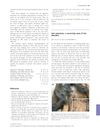
April 2018 in “Clinical, cosmetic and investigational dermatology” Tight hairstyles and chemical relaxers can cause hair loss known as traction alopecia.
 145 citations
,
November 2017 in “Journal of The European Academy of Dermatology and Venereology”
145 citations
,
November 2017 in “Journal of The European Academy of Dermatology and Venereology” Use minoxidil for hair loss treatment; assess results after 6 months.
 94 citations
,
September 2008 in “Journal of the American Academy of Dermatology”
94 citations
,
September 2008 in “Journal of the American Academy of Dermatology” Traction alopecia is more common in African women than girls, especially when traction is applied to chemically relaxed hair; avoiding such hairstyles may reduce the risk.
 219 citations
,
March 2004 in “Journal of The American Academy of Dermatology”
219 citations
,
March 2004 in “Journal of The American Academy of Dermatology” 5% and 2% minoxidil solutions effectively promote hair growth and reduce hair loss, with 5% being slightly more effective but having more side effects.
 214 citations
,
March 1993 in “Archives of Dermatology”
214 citations
,
March 1993 in “Archives of Dermatology” Telogen effluvium is a reversible hair loss condition that requires a detailed diagnosis and often resolves on its own.