Prediction of Long-Term Scalp Hair Regrowth at 24 Months in Patients with Alopecia Areata Receiving Ritlecitinib Treatment in the Allegro Clinical Trial Program
March 2025
in “
SKIN The Journal of Cutaneous Medicine
”
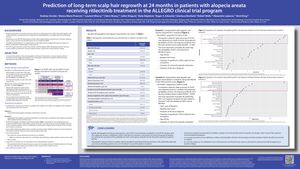
TLDR Certain patient characteristics can help predict hair regrowth success with ritlecitinib in alopecia areata.
The study within the ALLEGRO clinical trial program assessed 832 patients with alopecia areata (AA) to identify predictors of long-term scalp hair regrowth following ritlecitinib treatment. Key predictors for achieving a SALT score ≤20 at 24 months included baseline SALT score, SALT score at Month 6, non-AT/AU type, duration of AA since diagnosis, and duration of significant scalp hair loss at baseline. These findings indicate that certain patient characteristics can predict treatment outcomes, which may help optimize treatment decisions for AA. However, the predictive models are not yet validated for clinical practice and should not replace professional medical judgment.
