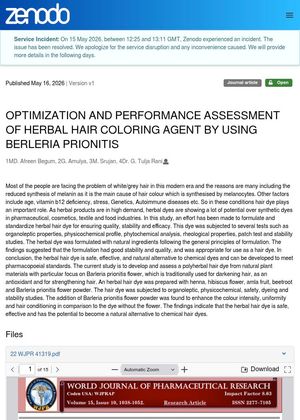
May 2026 in “Zenodo (CERN European Organization for Nuclear Research)” The study focuses on developing and assessing a polyherbal hair dye using natural plant materials, particularly Barleria prionitis flower, known for its traditional use in darkening hair and providing antioxidant benefits. The formulated dye, which includes henna, hibiscus flower, amla fruit, beetroot, and Barleria prionitis flower powder, underwent various tests for organoleptic, physicochemical, safety, dyeing, and stability properties. Results showed that the addition of Barleria prionitis enhanced color intensity, uniformity, and hair conditioning compared to formulations without it. The study concludes that this herbal hair dye is a safe, effective, and natural alternative to chemical dyes, meeting pharmacopoeial standards.
December 2025 in “Journal of Pharma Insights and Research.” The shampoo naturally colors and conditions hair safely without toxic chemicals.
December 2024 in “International Journal of Biology Pharmacy and Allied Sciences”
May 2026 in “Zenodo (CERN European Organization for Nuclear Research)” The study developed a herbal hair dye gel using natural ingredients such as henna, amla, palash, hibiscus, and reetha, which are known for their coloring, cleaning, and strengthening properties. The gel, formulated with a base of Carbopol 940, glycerin, methyl paraben, triethanolamine, and distilled water, was evaluated for various parameters including pH, viscosity, and stability. Results indicated that the gel had a suitable pH (6–7), good thickness, and was easy to apply, providing natural color, improving hair texture, and cleaning the scalp without causing irritation. The herbal hair dye gel was concluded to be a safe and effective natural alternative to chemical hair dyes, offering additional benefits for hair and scalp health.