TLDR Prolonged use of topical corticosteroids can cause excessive hair growth.
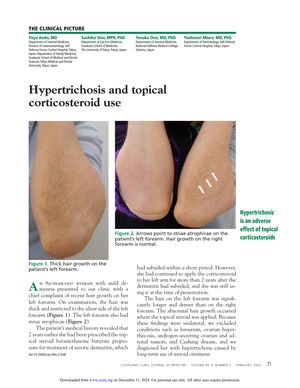
An 80-year-old woman with mild dementia experienced hypertrichosis, or excessive hair growth, on her left forearm after using the topical corticosteroid betamethasone butyrate propionate for over 2 years. Initially prescribed for xerotic dermatitis, the continued application of this potent steroid led to thick hair growth and striae atrophicae on the treated area. The case highlights hypertrichosis as a potential adverse effect of prolonged topical corticosteroid use. Upon tapering the steroid, the hair growth decreased significantly. This case underscores the importance of proper prescription and patient communication to prevent such side effects.

352 citations
,
January 2006 in “The Journal of Clinical Endocrinology and Metabolism” Most women referred for excess male hormone symptoms had polycystic ovary syndrome (PCOS), with other conditions being less common.
47 citations
,
August 2000 in “Endocrine Reviews” The document concludes that more research is needed to understand excessive hair growth in women with normal hormone levels and regular ovulation.
1 citations
,
March 2023 in “Clinical, Cosmetic and Investigational Dermatology” Current treatments for Alopecia Areata have mixed success, and there's a need for better, more accessible options and support for affected individuals.
4 citations
,
September 2011 in “Expert Review of Dermatology” Various treatments exist for alopecia areata, but none are completely satisfactory; choice depends on age, disease extent, and preference.
281 citations
,
January 2013 in “British Journal of Dermatology” Manage vitiligo with treatments, address emotions, and use camouflage techniques.
January 2022 in “Dermatology Review” Higher IL-31 levels are linked to worse itching in chronic kidney disease patients.
January 2017 in “Springer eBooks” The document explains various skin conditions and their treatments.