Long-Term Consequences of Critical Illness

    May 2012 in “ Surgery (oxford)
    Kaye Cantlay
    Image of study
    TLDR Patients who survive critical illness often face long-lasting physical, mental, and cognitive issues, with many unable to return to work within a year.
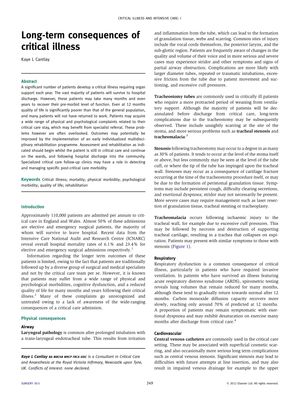
    The document from 2012 outlines the extensive long-term physical and psychological effects faced by patients after critical illness, including a wide range of issues such as respiratory dysfunction, cardiovascular complications, muscle wasting, hair loss, and severe psychological disorders like PTSD and depression. It emphasizes that recovery can be prolonged, with many patients not returning to work within a year and experiencing a lower quality of life compared to the general population. Cognitive impairments are also noted, often linked to the duration of delirium during the illness, leading to increased caregiver dependence. The socioeconomic impact is highlighted by the fact that only 49% of ARDS patients return to work after one year. The document advocates for early, individualized rehabilitation programs and specialized follow-up clinics to improve long-term outcomes, as recommended by NICE guidelines. However, it also points out the lack of universal access to specific critical care follow-up services, underlining the need for vigilant patient referral to address their complex needs.

    Discuss this study in the Community →

    Related Community Posts Join

    6 / 1000+ results

      community Hair loss & coffee consumption — curious about your experience

      in Chat  13 upvotes 1 week ago
      People shared their experiences with coffee consumption and hair loss, with mixed results. Some noticed more hair loss with increased caffeine, while others saw no effect or even hair regrowth, often using treatments like finasteride and minoxidil.

      community Hair loss help- on minoxidil and finasteride

      in Minoxidil  3 upvotes 1 week ago
      A 26-year-old male is using oral minoxidil and finasteride to treat hair loss, experiencing prolonged shedding despite 6 months of treatment. Others share similar experiences, suggesting persistence with the treatment may eventually lead to improvement.

      community The Real Reason For Hair Loss?

      in Research/Science 1 week ago
      Hair loss is linked to scalp fibrosis and tension, which result from chronic mechanical stress and androgenic signaling. Treatments include blocking androgens with finasteride, promoting hair growth with topical minoxidil, and improving scalp mobility through exercises.

      community Hair Loss "a matter of survival" in South Korea

      in Research/Science  332 upvotes 1 week ago
      South Korea's president is advocating for hereditary hair loss to be covered by national health insurance due to its impact on mental health and daily functioning. The discussion highlights the societal pressure in South Korea regarding appearance and the potential benefits of treating hair loss to improve mental health.

    Similar Research

    6 / 1000+ results