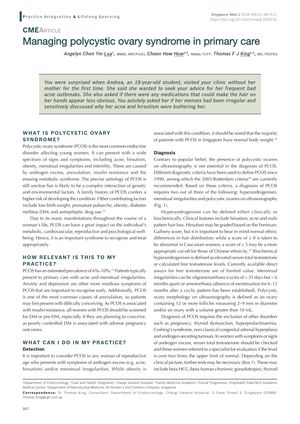
Managing Polycystic Ovary Syndrome in Primary Care
November 2018
in “
Singapore Medical Journal
”
polycystic ovary syndrome PCOS acne hirsutism obesity menstrual irregularities infertility androgen excess anovulation insulin resistance metabolic syndrome Rotterdam criteria Type 2 diabetes mellitus lifestyle modifications pharmacological therapy mental health withdrawal bleed endometrial hyperplasia oral contraceptive pill diabetes birth control pill
TLDR Primary care for PCOS focuses on lifestyle changes, medication based on symptoms, and mental health, with diabetes screening and specialist referral for severe cases.
The document from 2018 discusses the management of polycystic ovary syndrome (PCOS) in primary care, emphasizing its common symptoms like acne, hirsutism, obesity, menstrual irregularities, and infertility, which stem from androgen excess, anovulation, insulin resistance, and metabolic syndrome. It outlines the Rotterdam criteria for diagnosis and stresses the importance of screening for Type 2 diabetes mellitus due to the high risk in women with PCOS. Management strategies include lifestyle modifications, pharmacological therapy based on symptoms and patient goals, and addressing mental health concerns. The document also highlights the necessity of inducing a withdrawal bleed in patients with infrequent menses to prevent endometrial hyperplasia and recommends specialist referral for severe cases. A case study is mentioned where a patient experienced improvement in acne and overall health after six months on the oral contraceptive pill and regular exercise.