Migraine and the Menopause Transition
March 2026
in “
Menopause The Journal of The North American Menopause Society
”
TLDR Migraines often worsen during perimenopause, but safe treatments are available.
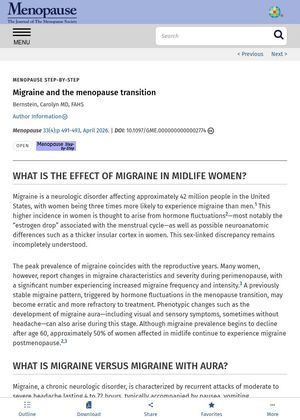
Migraine is a prevalent neurologic disorder affecting 42 million people in the U.S., with women experiencing it three times more often than men, likely due to hormonal fluctuations. During perimenopause, many women report increased frequency and intensity of migraines, often becoming more difficult to treat. Migraine with aura, which includes visual and sensory symptoms, poses a higher risk for ischemic stroke, especially when combined with hormone contraceptives. While hormone therapy may stabilize estrogen levels and alleviate menopause symptoms, its efficacy in controlling migraines is not well-supported by clinical trials. Safe management options include traditional medications, CGRP-targeted therapies, and integrative approaches. Migraine prevalence decreases after age 60 but persists in about 50% of affected women.