TLDR Oncogenic melanocyte stem cells can develop into melanoma similar to human cases.
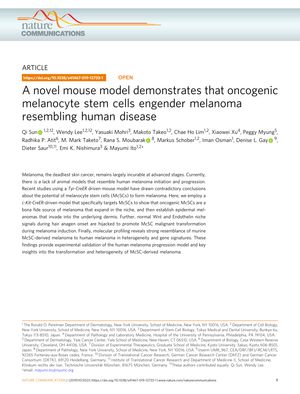
The study utilized a c-Kit-CreER-driven mouse model to demonstrate that oncogenic melanocyte stem cells (McSCs) could indeed form melanoma, addressing previous contradictory findings. The research showed that these McSCs expanded within their niche and developed into epidermal melanomas that invaded the dermis. It was found that normal Wnt and Endothelin signals, typically active during hair growth, were co-opted to facilitate the malignant transformation of McSCs. Molecular profiling indicated that the murine McSC-derived melanoma closely resembled human melanoma in terms of heterogeneity and gene signatures. This provided experimental support for the human melanoma progression model and offered insights into the transformation and diversity of McSC-derived melanoma.

59 citations
,
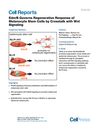
April 2016 in “Cell Reports” EdnrB signaling helps melanocyte stem cells regenerate and could be targeted to treat pigmentation issues.
260 citations
,
June 2011 in “Cell” Wnt signaling is crucial for pigmented hair regeneration by controlling stem cell activation and differentiation.
240 citations
,
April 2011 in “Pigment Cell & Melanoma Research” Melanocyte stem cells in hair follicles are key for hair color and could help treat greying and pigment disorders.
283 citations
,
February 2011 in “Cell stem cell” COL17A1 is crucial for preventing hair graying and loss by supporting hair and pigment stem cells.
164 citations
,
February 2010 in “Journal of Cell Science” Human dermal stem cells can become functional skin pigment cells.
829 citations
,
May 2007 in “Nature” Hair follicles can regrow in wounded adult mouse skin using a process like embryo development.
24 citations
,
March 2018 in “Pigment Cell & Melanoma Research” The environment around melanocyte stem cells is key for hair regeneration and color, with certain injuries affecting hair color and potential treatments for pigmentation disorders.
41 citations
,
December 2018 in “Experimental Dermatology” Understanding how melanocyte stem cells work could lead to new treatments for hair graying and skin pigmentation disorders.
11 citations
,
October 2021 in “Frontiers in Cell and Developmental Biology” Non-coding RNAs are important for hair growth and could lead to new hair loss treatments, but more research is needed.
3 citations
,
November 2023 in “Frontiers in cell and developmental biology” Melanocytes are important for skin and hair color and protect the skin from UV damage.
66 citations
,
March 2019 in “Cellular and Molecular Life Sciences” Melanocyte development from neural crest cells is complex and influenced by many factors, and better understanding could help treat skin disorders.