TLDR Intralesional corticosteroids effectively treat localized alopecia areata, often sparing white hairs.
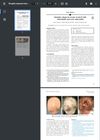
A 55-year-old man presented with a 5.5 cm alopecic patch on the right temporal scalp, sparing white hairs, and was treated with intralesional triamcinolone acetonide, leading to regrowth of pigmented hair. The case highlights that intralesional corticosteroids are the first-line treatment for localized alopecia areata. The patient's hair regrowth pattern was treatment-specific, with initial regrowth of hypopigmented hairs. Alopecia areata is primarily a T cell-mediated autoimmune disease, targeting pigmented hairs and sparing white hairs, which explains the phenomenon of hair turning "white overnight."
1 citations
,
April 2023 in “Clinical, cosmetic and investigational dermatology” Antigens from skin cells may cause hair loss in perinevoid alopecia.
67 citations
,
July 2011 in “Clinical, cosmetic and investigational dermatology” The document suggests a personalized treatment plan for alopecia areata based on the patient's age and hair loss severity, using a range of therapies ranked by effectiveness and safety.
118 citations
,
April 1998 in “Dermatologic Clinics” Finasteride and minoxidil are effective for hair regrowth, while treatments for alopecia areata have varying success and continuous treatment is necessary.
1 citations
,
August 2022 in “JAAD case reports” Tofacitinib and oral minoxidil may help treat Sisaipho alopecia areata.
April 2022 in “Journal of Cosmetic Dermatology” Trimax-360 Serum, when used for 98 days, safely and effectively improves hair growth, thickness, and density without any side effects.
5 citations
,
January 2020 in “Journal of Dermatology” Temporal hair loss relates to overall scalp hair loss in women.
41 citations
,
December 2008 in “International Journal of Dermatology” South Korean women with hair loss have lower hair density and thickness compared to healthy women.