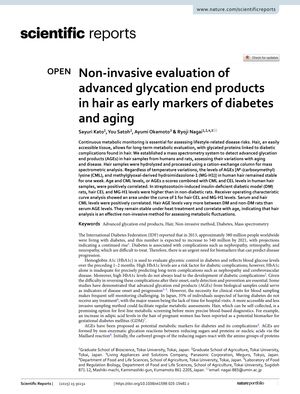
TLDR Hair analysis can effectively detect diabetes and aging markers.
This study demonstrates that hair analysis is an effective non-invasive method for assessing metabolic fluctuations related to diabetes and aging. Using mass spectrometry, researchers detected advanced glycation end products (AGEs) in hair samples from humans and rats, finding that levels of AGEs such as Nε-(carboxymethyl)lysine (CML) and methylglyoxal-derived hydroimidazolone-1 (MG-H1) remained stable despite temperature variations. In diabetic model rats, hair CEL and MG-H1 levels were significantly higher than in non-diabetic rats, with a perfect area under the curve of 1 in receiver operating characteristic analysis. The study found positive correlations between age and CML levels, as well as between serum and hair CML levels, suggesting that hair can serve as a reliable marker for long-term metabolic evaluation.

102 citations
,
July 2020 in “International journal of molecular sciences” Hormones like testosterone and estrogen significantly affect hair growth and structure.
7 citations
,
November 2006 in “Journal of immunological methods” The method can help diagnose and monitor diabetes by analyzing hair.
1113 citations
,
August 1999 in “The New England Journal of Medicine” Hair follicle biology advancements may lead to better hair growth disorder treatments.
6 citations
,
January 1988 in “Japanese Journal of Medicine” Hair glycation levels can indicate long-term blood sugar control.
April 2021 in “Journal of Investigative Dermatology” Photobiomodulation therapy may help treat hair loss in people with darker skin, but more research is needed.
November 2025 in “Frontiers in Nutrition” Olive leaf extract may help reduce aging signs in postmenopausal women.
February 2019 in “International Journal of Dermatology and Clinical Research” Nε-(carboxymethyl) lysine delays hair growth by blocking a key protein.
6 citations
,
May 2025 in “Cosmetics” Sunscreen technology is improving with new ingredients and methods to better protect skin from sun damage.
2 citations
,
October 2025 in “Chinese Medicine” Berberine delivery systems improve wound healing by enhancing bioavailability, reducing inflammation, and promoting tissue regeneration.