Noninvasive Method for Assessing the Human Circadian Clock Using Hair Follicle Cells
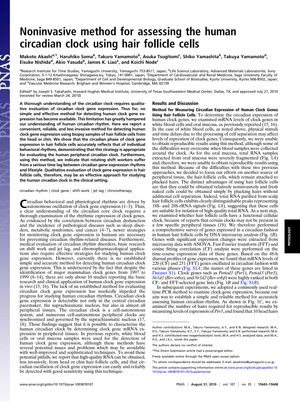
    Makoto Akashi, Haruhiko Soma, Takuro Yamamoto, Asuka Tsugitomi, Shiko Yamashita, Takuya Yamamoto, Eisuke Nishida, Akio Yasuda, James K. Liao, Koichi Node
    Image of study
    TLDR Scientists found a new, less invasive way to study body clocks using hair cells, which shows shift workers' body clocks don't match their lifestyles.
    In 2010, researchers developed a convenient, reliable, and less invasive method to assess human circadian clock gene expression by using biopsy samples from hair follicle cells. This method proved to accurately reflect individual behavioral rhythms, aligning with the peripheral circadian clock. The study also found that rotating shift workers experience a significant time lag between their circadian gene expression rhythms and their lifestyles. This technique for evaluating clock gene expression in hair follicle cells could be beneficial for clinical studies of the human circadian clock.

    Discuss this study in the Community →

    Related Community Posts Join

    6 / 1000+ results

      community How is dht not beneficial to you?

      in Finasteride/Dutasteride  106 upvotes 5 days ago
      DHT is important for sexual function and mood, but finasteride and dutasteride can reduce DHT, causing side effects like reduced libido and erectile dysfunction. These treatments are effective for hair loss, but their impact on DHT leads to debate.

      community Regrowth with only Nizoral and Lifestyle Changes; focusing on scalp health & nervous system

      in Is this regrowth?  82 upvotes 2 weeks ago
      The user reported subtle hair regrowth by focusing on scalp health and lifestyle changes, using Nizoral shampoo and methods to reduce inflammation and cortisol, without using finasteride, minoxidil, or other common treatments. Opinions in the conversation varied, with some skeptical of the results and others acknowledging the potential benefits of addressing scalp health and inflammation.

      community Got a microscope camera. Here’s the difference between healthy and miniaturized hair

      in Progress Pictures  492 upvotes 3 years ago
      A user who shared progress pictures of their scalp using a microscope camera, demonstrating the difference between healthy and miniaturized hair. Various explanations for the cause of this were discussed, such as DHT build-up in scalp sebum causing an autoimmune response leading to inflammation and eventual hair loss, with some suggesting a do-it-yourself treatment involving adding ascorbic acid powder to shampoo.

      community My Theory Of Androgenic Alopecia

      in Research/Science  19 upvotes 2 months ago
      Hair loss is linked to cellular physiology and the IGF-1 to TGF-B1 ratio, not just androgen sensitivity. The theory lacks evidence, while finasteride and minoxidil are effective treatments.

    Similar Research

    5 / 1000+ results