TLDR OCT can non-invasively diagnose follicular keratosis and other hair follicle disorders.
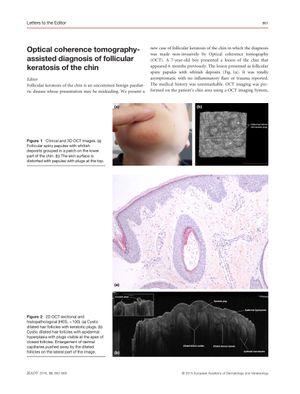
The document described a case of follicular keratosis of the chin in a 7-year-old boy, diagnosed non-invasively using Optical Coherence Tomography (OCT). The OCT images revealed cystic dilated hair follicles with keratotic plugs, which were confirmed by histopathology. Despite treatment with topical tretinoin 0.05%, the lesions did not improve. The study highlighted the potential of OCT as a diagnostic tool for follicular disorders and suggested its utility in investigating other skin diseases involving hair follicles, such as acne or rosacea. The condition is benign and typically requires avoiding pressure and friction on the lesion for management.

13 citations
,
July 2007 in “Pediatric dermatology” Vitamin D3 ointment improved skin bumps on the chin but didn't give lasting results after stopping use.
Traumatic anserine folliculosis is a harmless skin condition in young males that needs correct diagnosis to avoid unnecessary treatments.
May 2023 in “Experimental Dermatology” RCM and OCT are effective for diagnosing and monitoring hair-related skin diseases but lack standardized protocols and need more research.
2 citations
,
May 2023 in “Experimental dermatology” New imaging techniques can assess and track changes in mouse acne without harm, aiding treatment choices.
January 2022 in “Dermatology Review” Higher IL-31 levels are linked to worse itching in chronic kidney disease patients.
5 citations
,
February 2004 in “Clinical and Experimental Ophthalmology” Multiple eye conditions were studied, highlighting the importance of various imaging methods for diagnosis, the vision side effects of drugs tamoxifen and Propecia, and the usefulness of optical coherence tomography for diagnosing and monitoring macular and retinal diseases.