Pathophysiology and Complications of Polycystic Ovary Syndrome: A Stepwise Visual Infographic
May 2026
in “
Zenodo (CERN European Organization for Nuclear Research)
”
Polycystic Ovary Syndrome PCOS insulin resistance hyperinsulinemia type 2 diabetes dyslipidemia cardiovascular disease GnRH pulsatility LH:FSH ratio hormonal imbalances hyperandrogenism hirsutism acne androgenic alopecia impaired follicular maturation anovulation irregular menstrual cycles infertility endometrial hyperplasia endometrial cancer Rotterdam diagnostic criteria hair loss male pattern baldness female pattern baldness
TLDR PCOS is influenced by genetics and lifestyle, causing hormonal imbalances and health risks like diabetes and infertility.
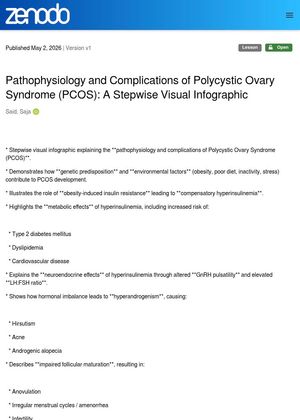
The document provides a stepwise visual infographic on the pathophysiology and complications of Polycystic Ovary Syndrome (PCOS), highlighting the interplay between genetic predisposition and environmental factors such as obesity, poor diet, inactivity, and stress in the development of PCOS. It explains how obesity-induced insulin resistance leads to compensatory hyperinsulinemia, which has metabolic effects like increased risk of type 2 diabetes, dyslipidemia, and cardiovascular disease. The neuroendocrine effects include altered GnRH pulsatility and an elevated LH:FSH ratio, resulting in hormonal imbalances that cause hyperandrogenism, leading to symptoms like hirsutism, acne, and androgenic alopecia. The infographic also describes impaired follicular maturation, leading to anovulation, irregular menstrual cycles, infertility, and increased risk of endometrial hyperplasia/cancer. The Rotterdam diagnostic criteria for PCOS are included, and the resource is designed for medical students, healthcare professionals, and educators.