TLDR Penguin Cold Caps help most patients keep at least half their hair during chemotherapy.
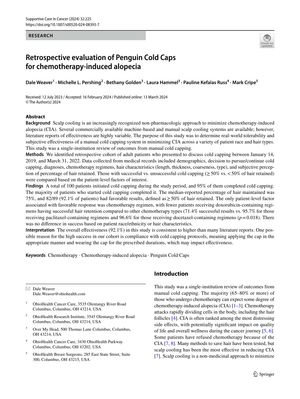
This study evaluated the effectiveness of Penguin Cold Caps in minimizing chemotherapy-induced alopecia (CIA) among 100 patients, with 95% completing the cold capping process. The median-reported hair retention was 75%, and 92.1% of patients experienced favorable results, defined as retaining at least 50% of their hair. The success of hair retention was significantly influenced by the type of chemotherapy regimen, with lower success rates for doxorubicin-containing regimens compared to paclitaxel and docetaxel regimens. No significant differences in success were observed based on patient race/ethnicity or hair characteristics. The study suggests that adherence to cold capping protocols may contribute to the high effectiveness observed.
5 citations
,
March 2023 in “Cancer” Oncologists should better understand the unique impact of hair loss on Black breast cancer patients to offer more compassionate care.
25 citations
,
March 2018 in “Journal of oncology practice” Scalp cooling is an effective and safe way to prevent hair loss from chemotherapy, with manageable side effects and low risk of scalp cancer.
37 citations
,
October 2017 in “JEADV. Journal of the European Academy of Dermatology and Venereology/Journal of the European Academy of Dermatology and Venereology” Scalp cooling effectively reduces hair loss from chemotherapy.
 48 citations
,
February 2017 in “Journal of Cosmetic Dermatology”
48 citations
,
February 2017 in “Journal of Cosmetic Dermatology” The conclusion is to use scalp cooling, gentle hair care, and treatments like minoxidil for managing hair loss from chemotherapy, and stresses the need for more research and collaboration in this area.
110 citations
,
August 2014 in “International journal of cancer” Scalp cooling significantly reduces chemotherapy-induced hair loss.
 45 citations
,
March 2010 in “Journal der Deutschen Dermatologischen Gesellschaft”
45 citations
,
March 2010 in “Journal der Deutschen Dermatologischen Gesellschaft” A systematic approach is crucial for managing hair loss in women.