Phytochemical Analysis and Assessment of the Antioxidant, Hemolytic, and Antibacterial Properties of Leaves and Rhizomes of Carthamus Caeruleus L.
April 2026
in “
Journal of Microbiology Biotechnology and Food Sciences
”
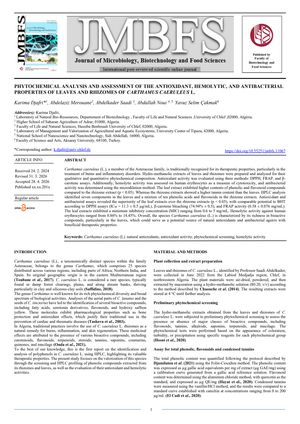
TLDR Carthamus caeruleus leaves are a good source of natural antioxidants and antibacterial agents.
The study on Carthamus caeruleus L. reveals that its leaves and rhizomes contain significant bioactive compounds, with leaves showing higher levels of phenolic and flavonoid compounds, while rhizomes are richer in tannins. Leaf extracts demonstrated superior antioxidant and antibacterial activity, with antioxidant potential comparable to BHT and a minimum inhibitory concentration (MIC) ranging from 0.6 to 5 mg/mL against various bacteria. Hemolytic activity ranged from 0.86% to 14.45%. These findings suggest that C. caeruleus leaves could be a valuable source of natural antioxidants and antibacterial agents, with potential applications in developing therapeutic agents for oxidative stress, bacterial infections, wound healing, and as natural supplements. Further research is needed to understand the specific roles of individual phytochemicals in these bioactivities.