TLDR Dermatologists should focus on restoring skin health and well-being in cancer survivors.
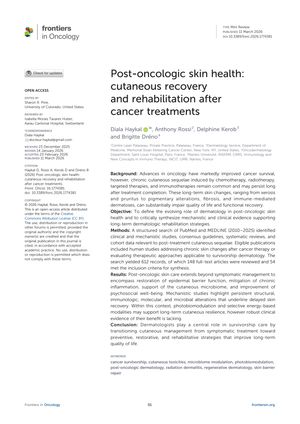
Advances in cancer treatment have improved survival rates, but chronic skin issues from therapies can persist, affecting quality of life. This review highlights the importance of dermatology in post-cancer skin health, emphasizing the need for strategies that go beyond symptom management to restore skin function, reduce inflammation, support the microbiome, and enhance psychosocial well-being. Despite the potential of treatments like photobiomodulation, strong clinical evidence is still needed. Dermatologists are crucial in shifting care towards preventive and rehabilitative approaches to improve long-term outcomes for cancer survivors.

July 2025 in “Dermatologic Surgery” PRP may increase hair density but doesn't improve quality of life in breast cancer survivors with hair loss.
11 citations
,
July 2024 in “Cancers” Preventing and managing skin issues from cancer treatment is crucial, especially in high UV areas like Australia and New Zealand.
15 citations
,
November 2023 in “Supportive Care in Cancer” Dermocosmetics help manage skin issues in cancer patients, improving outcomes and reducing treatment interruptions.
4 citations
,
November 2021 in “Cancers” The document concludes that understanding and managing hair loss in cancer patients is important, and more research is needed for better treatments.
68 citations
,
January 2014 in “Dermatology research and practice” Skin side effects from cancer drugs targeting EGFR can affect treatment adherence but can be managed with antibiotics like tetracycline.
34 citations
,
November 2013 in “Breast Cancer Research and Treatment” Aromatase inhibitor therapy for breast cancer increases the risk of hair loss and thinning.
48 citations
,
September 2013 in “Oncologist” Endocrine therapies for cancer significantly increase the risk of hair loss.