TLDR Both pretrimmed and direct nonshaven methods are effective for hair transplants; pretrimmed takes longer but yields denser, longer hair.
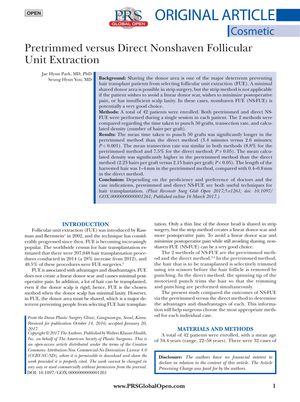
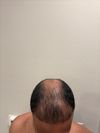
In a study with 42 patients, the pretrimmed method of follicular unit extraction (FUE) for hair transplantation was compared to the direct nonshaven (NS-FUE) method. The pretrimmed method took longer to harvest 50 grafts (3.4 minutes) than the direct method (2.6 minutes). However, both methods had similar transection rates, with 8.8% for pretrimmed and 7.5% for direct. The pretrimmed method resulted in a higher calculated density of hairs per graft (2.23) compared to the direct method (2.15), and the harvested hair was longer (1–4 mm vs. 0.4-0.8 mm). The study concluded that both methods are effective for hair transplantation, with the choice depending on the surgeon's skill and the case requirements.
 10 citations
,
August 2015 in “Journal of Cosmetic Dermatology”
10 citations
,
August 2015 in “Journal of Cosmetic Dermatology” Successful eyebrow restoration can be done using careful hair transplant techniques and choosing the right patients.
 13 citations
,
March 2015 in “Plastic and reconstructive surgery. Global open”
13 citations
,
March 2015 in “Plastic and reconstructive surgery. Global open” Leg hair can be used for eyelash transplants, resulting in fuller lashes with less maintenance.
 16 citations
,
October 2008 in “Dermatologic Surgery”
16 citations
,
October 2008 in “Dermatologic Surgery” The new powered hair transplant method is faster and damages fewer hairs than the manual method.
 30 citations
,
June 2008 in “Dermatologic Surgery”
30 citations
,
June 2008 in “Dermatologic Surgery” The SAFE System may improve hair transplant results but isn't suitable for everyone.
 12 citations
,
January 2006 in “Aesthetic Plastic Surgery”
12 citations
,
January 2006 in “Aesthetic Plastic Surgery” Micrografts can effectively restore pubic hair, and using the right technique is crucial for natural-looking results.
 27 citations
,
January 2006 in “Dermatologic Surgery”
27 citations
,
January 2006 in “Dermatologic Surgery” The SAFE System for hair transplants results in low damage to follicles and could make the procedure suitable for more patients.
 153 citations
,
August 2002 in “Dermatologic Surgery”
153 citations
,
August 2002 in “Dermatologic Surgery” Follicular Unit Extraction (FUE) is a less invasive hair transplant method with minimal scarring, suitable for about 60% of patients, especially those needing fewer grafts and quicker recovery.