TLDR Early investigation and a team approach are crucial for managing primary amenorrhea effectively.
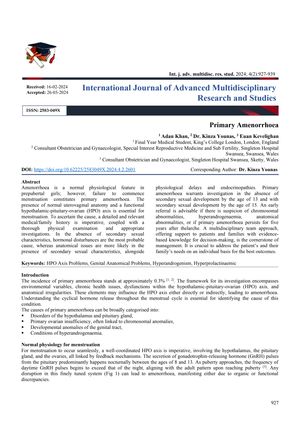
Primary amenorrhea is the failure to commence menstruation and can be due to hormonal disturbances or anatomical problems. A normal uterovaginal anatomy and functional HPO axis are essential for menstruation. Investigations should be conducted at age 13 if there are no secondary sexual characteristics, and at age 15 if there are. Early referral is advised if there is suspicion of chromosomal abnormalities, hyperandrogenemia, anatomical issues, or if amenorrhea persists for 5 years after thelarche. A multidisciplinary team approach is crucial to support patients and families with evidence-based knowledge for decision-making, addressing their individual needs for the best outcome.
 18 citations
,
January 2020 in “Journal of Clinical Research in Pediatric Endocrinology”
18 citations
,
January 2020 in “Journal of Clinical Research in Pediatric Endocrinology” The document concludes that Functional Hypothalamic Amenorrhea should be carefully diagnosed and managed to prevent health complications, using lifestyle changes and specific medications.
 117 citations
,
May 2017 in “Human Reproduction Update”
117 citations
,
May 2017 in “Human Reproduction Update” The update highlights that non-classic congenital adrenal hyperplasia is common in women with excess male hormones, requires specific hormone tests for diagnosis, and has various treatment options depending on age and symptoms.
 343 citations
,
October 2015 in “Endocrine Practice”
343 citations
,
October 2015 in “Endocrine Practice” The guide recommends specific methods for diagnosing PCOS and various treatments for its symptoms, while considering the health impacts on adolescents.
 34 citations
,
January 2008 in “International Review of Neurobiology”
34 citations
,
January 2008 in “International Review of Neurobiology” Epilepsy and certain epilepsy drugs can lead to reproductive problems in women, but changing medication might improve these issues.
 4809 citations
,
January 2004 in “Fertility and Sterility”
4809 citations
,
January 2004 in “Fertility and Sterility” The 2003 consensus updated PCOS diagnosis criteria and highlighted increased risks of diabetes and heart disease for those affected.