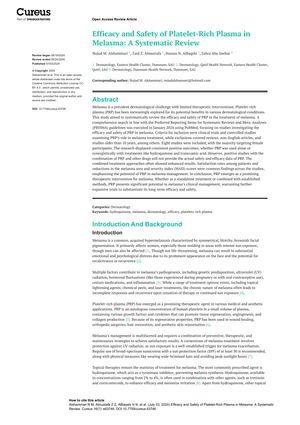
TLDR Platelet-rich plasma (PRP) shows promise for treating melasma but needs more research for confirmation.
This systematic review evaluated the efficacy and safety of platelet-rich plasma (PRP) in treating melasma, including 8 studies primarily involving female participants. The findings consistently showed positive outcomes, with PRP used alone or in combination with treatments like hydroquinone and tranexamic acid, leading to improved satisfaction rates and reductions in the melasma area and severity index (MASI) scores. While combined treatments often enhanced results, they did not isolate PRP's specific effects. Overall, PRP appears to be a promising therapeutic option for melasma, but further extensive trials are needed to confirm its long-term efficacy and safety.

7 citations
,
February 2022 in “Journal of Personalized Medicine” Platelet-Rich Plasma therapy significantly increases hair density in people with Androgenic Alopecia, and works better with more treatments per month and in younger patients.
1 citations
,
August 2024 in “Cosmetics” Melasma treatment is difficult, but combination therapies and personalized plans show promise.
3 citations
,
January 2023 in “Journal of Cutaneous and Aesthetic Surgery” Intradermal PRP significantly improved melasma in dark skin, with lasting results and no relapse after 3 months.
138 citations
,
June 2023 in “Molecules” Skin pigmentation varies due to genetics, UV exposure, and drugs, with treatments available but requiring medical advice.
17 citations
,
January 2021 in “Dermatology and Therapy” Laser-assisted drug delivery has shown improved treatment outcomes for skin conditions and has potential to reduce side effects and treatment time.
1 citations
,
November 2022 in “Journal of Dermatological Treatment” Platelet-rich plasma can increase hair density and may help treat some skin conditions, but it's costly, not FDA-approved, and needs more research.