PRP Versus Intralesional Triamcinolone for Alopecia Areata: Comparative Study

    Omar Suahil Ahmed, Mazin Hamid Ayyash
    TLDR PRP is more effective than triamcinolone for treating alopecia areata.
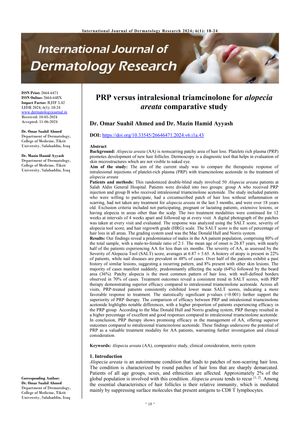
    This study compared the effectiveness of platelet-rich plasma (PRP) injections versus intralesional triamcinolone acetonide in treating alopecia areata in 50 patients. Conducted over 12 weeks, the study found that PRP therapy was more effective, as indicated by consistently lower mean SALT scores, suggesting better hair regrowth. The patient group was predominantly male, with a mean age of onset at 26.87 years, and most cases involved the scalp. The study highlights PRP as a superior treatment option for alopecia areata compared to triamcinolone acetonide.

    Discuss this study in the Community →

    Related Community Posts Join

    6 / 117 results

      community Do Platelet-rich plasma, PRP work?

      in Research/Science  13 upvotes 2 years ago
      Someone's brother tried Platelet-rich plasma (PRP) for hair loss; it had minimal effect on hair but improved skin appearance. Microneedling at home was suggested as a more sustainable alternative.

      community Thoughts on platelet-rich plasma therapy

      in Treatment  3 upvotes 1 year ago
      Platelet-rich plasma (PRP) therapy for hair loss is expensive, painful, and often ineffective, with mixed reviews on its benefits. Alternatives like minoxidil, finasteride, and hair transplants are suggested as more reliable options.

      community Microneedling versus Platelet-Rich Plasma

      in Research/Science  9 upvotes 4 months ago
      Microneedling and Platelet-Rich Plasma (PRP) are equally effective for treating androgenetic alopecia, with no additional benefits from PRP over microneedling. Both treatments are safe and well-tolerated.

      community Why can't you drink caffeine after PRP?

      in Treatment  10 upvotes 3 years ago
      The conversation discusses avoiding caffeine after Platelet-Rich Plasma (PRP) treatment for hair loss because caffeine is a vasoconstrictor, which can reduce blood flow and hinder the healing process that PRP aims to promote.

      community I just made my own PRP - DIY PRP

      in Research/Science  552 upvotes 2 years ago
      The post and conversation are about a user who made their own Platelet-Rich Plasma (PRP) for hair loss treatment at home, using their own blood and a centrifuge. The responses vary, with some users supporting the DIY approach to save money, others expressing concern about the safety and effectiveness of the method, and a few joking about the lengths people will go to combat hair loss.

    Related Research

    1 / 1 results