Self-Prescribed Nutrition Supplements for Hair Loss Following Laparoscopic Sleeve Gastrectomy Bariatric Surgery: Extent of the Problem in a Cohort of Chinese Patients

    Sachin Bhagat, Hongbo Guo, Radheshyam Gupta, Jinxia Zhu, Jay Shah
    Image of study
    TLDR Many Chinese patients lose hair after weight loss surgery, especially women, and taking iron and zinc on their own doesn't help.
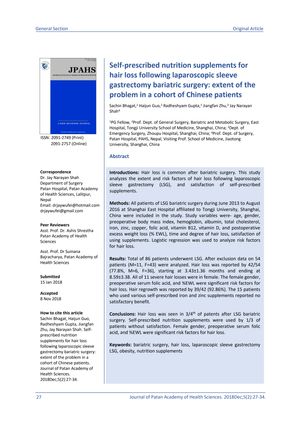
    In a 2018 study of 54 Chinese patients post-laparoscopic sleeve gastrectomy (LSG) bariatric surgery, 77.8% experienced hair loss, with all severe cases occurring in females. The onset of hair loss averaged at 3.43±1.36 months, ceasing at 8.59±3.38 months. Despite 15 patients using self-prescribed iron and zinc supplements, no benefits were observed. Female gender, low preoperative serum folic acid levels, and higher percentage of excess weight loss were significant risk factors for hair loss. The study concluded that hair loss is common after LSG surgery, particularly in females, and self-prescribed supplements are ineffective in addressing it. The study's limitations included a small sample size and potential bias from self-reporting.

    Discuss this study in the Community →

    Related Community Posts Join

    6 / 1000+ results

      community Hair Loss “Cure” for Inflammation: Topical Roflumilast

      in Research/Science  28 upvotes 1 day ago
      Topical roflumilast is effective for reducing inflammation in various scalp conditions like seborrheic dermatitis, psoriasis, and eczema, but not proven to stop scarring alopecia. Alternatives like apremilast and Vtama are also discussed for their anti-inflammatory benefits.

      community Hair loss stack thoughts? New to this!

      in Treatment  2 upvotes 3 days ago
      The conversation is about a hair loss treatment plan involving finasteride, minoxidil, microneedling, GHK-CU injections, Nizoral shampoo, and RU58841. The user is advised to start with a simpler regimen to minimize side effects and assess effectiveness before adding more treatments.

      community Hair loss over a year following depression and taking antidepressants

      in Side effects?  196 upvotes 6 days ago
      A 33-year-old experienced significant hair loss after a depressive episode and taking paroxetine, possibly due to telogen effluvium or androgenic alopecia. Suggestions included reducing alcohol, considering finasteride and minoxidil, and consulting a doctor about antidepressant side effects.

      community Hair loss journey - progress check & questions

      in Progress Pictures  1 upvotes 1 week ago
      The user shared their hair loss journey, using Minoxidil 2%, Serenoa repens, topical finasteride, a topical antiandrogen, Vitamin D, and lifestyle changes, noting improvements but still seeking more density. They are considering switching to Minoxidil 5% but prefer focusing on finasteride and antiandrogen for better results.

      community Hair loss & coffee consumption — curious about your experience

      in Chat  11 upvotes 2 weeks ago
      People shared their experiences with coffee consumption and hair loss, with mixed results. Some noticed more hair loss with increased caffeine, while others saw no effect or even hair regrowth, often using treatments like finasteride and minoxidil.

    Related Research

    1 / 1 results