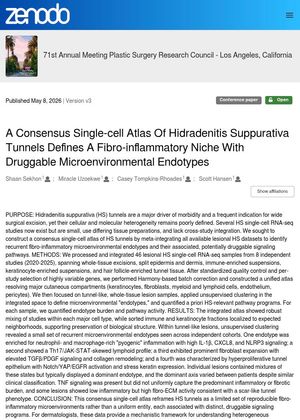
May 2026 in “Zenodo (CERN European Organization for Nuclear Research)” The study constructs a consensus single-cell atlas of hidradenitis suppurativa (HS) tunnels by integrating 46 lesional HS single-cell RNA-seq samples from 8 studies. It identifies distinct fibro-inflammatory microenvironmental endotypes within HS tunnels, each associated with specific, potentially druggable signaling pathways. The atlas reveals four main endotypes: one with neutrophil- and macrophage-rich inflammation, another with a Th17/JAK-STAT lymphoid profile, a third with fibroblast expansion and collagen remodeling, and a fourth with hyperproliferative tunnel epithelium. These findings suggest that HS tunnels are not uniform but consist of reproducible microenvironments, which may explain varied responses to treatments. The study highlights that TNF blockade may not be effective for all lesions and suggests that understanding these endotypes can guide more targeted therapeutic and surgical strategies.
3 citations
,
January 2025 in “JID Innovations” Hidradenitis suppurativa tunnels worsen the disease and often need surgery because current treatments are not very effective.
22 citations
,
August 2021 in “Frontiers in medicine” Immune cells in Hidradenitis suppurativa become more inflammatory and may be important for treatment targets.