TLDR Stem cell niches are essential for tissue health and repair.
The document reviewed the concept of the stem cell niche, emphasizing its critical role in regulating stem cells and their progenitors across various systems, including the skin, hair follicles, and neural environments. It described the niche as a microenvironment providing essential support and regulatory signals, influencing stem cell self-renewal and differentiation. The review highlighted specific signaling pathways, such as Wnt, JAK-STAT, BMP, and Notch, and the importance of niche components like integrins and growth factors (EGF, FGF-2) in maintaining tissue homeostasis and responding to injury. The complexity of mammalian niches, particularly in neural and epidermal systems, was noted, with proteins like Aspm and Numb playing crucial roles. The document concluded that further research was needed to fully understand these interactions and develop therapeutic targets for tissue-specific diseases.

49 citations
,
February 2008 in “Stem Cells” Wnt10b helps blood stem cells grow after injury.
415 citations
,
January 2008 in “Cell” NFATc1 controls hair stem cell activity, affecting hair growth and could be a target for hair loss treatments.
829 citations
,
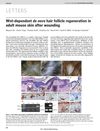
May 2007 in “Nature” Hair follicles can regrow in wounded adult mouse skin using a process like embryo development.
788 citations
,
February 2007 in “Nature” The document concludes that skin stem cells are important for hair growth and wound healing, and could be used in regenerative medicine.
1 citations
,
September 2023 in “eLife” TLR2 is important for hair growth and can be targeted to treat hair loss.
April 2024 in “Frontiers in physiology” Immune cells are crucial for hair growth and preventing hair loss.
Different stem cells are key for hair growth and health, and understanding their regulation could help treat hair loss.
5 citations
,
April 2022 in “Frontiers in Medicine” Hair and skin healing involve complex cell interactions controlled by specific molecules and pathways, and hair follicle cells can help repair skin wounds.
38 citations
,
June 2019 in “International Journal of Molecular Sciences” Tiny particles called extracellular vesicles could help with skin healing and hair growth, but more research is needed.
25 citations
,
April 2021 in “The EMBO Journal” Hair follicle stem cells help maintain skin health and could improve skin replacement therapies.