TLDR Stress greatly reduces the quality of life in women with PCOS-related infertility.
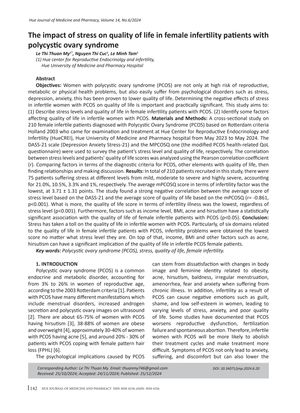
This study on 210 female infertility patients with polycystic ovary syndrome (PCOS) found that stress significantly impacts their quality of life. Using the DASS-21 and mPCOSQ scales, a strong negative correlation (r = -0.861, p < 0.001) was observed between stress levels and quality of life scores. Infertility issues scored the lowest in quality of life domains, regardless of stress level. Additionally, factors such as income, BMI, acne, and hirsutism were significantly associated with quality of life (p < 0.05). The findings highlight the importance of addressing stress and these factors to improve the quality of life in infertile women with PCOS.

2 citations
,
January 2017 in “Cambridge University Press eBooks” Manage PCOS in primary care with weight loss, psychological support, medication, and monitoring for health risks.
17 citations
,
September 2017 in “Journal of Cosmetic Dermatology” Women with PCOS in North China often have hirsutism and acne, with hirsutism linked to metabolic issues.
July 2022 in “International journal of medical science and clinical invention” Women with irregular periods should be checked for PCOS and treated early to prevent complications, with birth control pills helping to manage symptoms.
20 citations
,
June 2010 in “International Journal of Dermatology” Women with mild acne are more likely to have polycystic ovary syndrome (PCOS) than those without acne.
7 citations
,
February 2018 in “International Journal of Research in Medical Sciences” PCOS is common in women with acne, especially those who are obese or have excess hair growth.
1514 citations
,
December 2011 in “Fertility and sterility” Experts agree that PCOS affects women's health in complex ways, but more research is needed to understand and treat it effectively.