107 citations
,
December 2013 in “International Journal of Dermatology”
107 citations
,
December 2013 in “International Journal of Dermatology” The document concludes that hair is complex, with a detailed growth cycle, structure, and clinical importance, affecting various scientific and medical fields.
 47 citations
,
January 2013 in “International Journal of Cosmetic Science”
47 citations
,
January 2013 in “International Journal of Cosmetic Science” Hair diversity is influenced by complex genetics and environmental factors, requiring more research for practical solutions.
 72 citations
,
February 2011 in “American Journal of Biological Anthropology”
72 citations
,
February 2011 in “American Journal of Biological Anthropology” The conclusion is that recognizing hair growth cycles can improve the precision of dietary and health assessments from hair analysis.
 88 citations
,
June 2009 in “Cleveland Clinic Journal of Medicine”
88 citations
,
June 2009 in “Cleveland Clinic Journal of Medicine” To manage diffuse hair loss, identify the cause, improve nutrition, remove triggers, and use specific treatments like minoxidil or finasteride.
 70 citations
,
January 2009 in “Indian Journal of Dermatology, Venereology and Leprology”
70 citations
,
January 2009 in “Indian Journal of Dermatology, Venereology and Leprology” To manage hair loss in adult women, find the cause and treat it accordingly.
 501 citations
,
October 2008 in “Psychoneuroendocrinology”
501 citations
,
October 2008 in “Psychoneuroendocrinology” Hair cortisol levels can show increased stress during late pregnancy but only for up to six months.
567 citations
,
October 2007 in “Clinical and investigative medicine” Hair cortisol can be used to measure long-term stress exposure.
254 citations
,
January 2007 in “Chemical Society Reviews” Hair is a complex protein fiber with unique properties useful for developing hair products.
20 citations
,
July 2006 in “Annals of Anatomy - Anatomischer Anzeiger” The 15th-century Korean mummy's hair was well-preserved due to a protective lime-soil coating.
 375 citations
,
July 2006 in “Journal of Investigative Dermatology”
375 citations
,
July 2006 in “Journal of Investigative Dermatology” Stress can worsen skin and hair conditions by affecting the skin's immune response and hormone levels.
 115 citations
,
September 2005 in “International Journal of Dermatology”
115 citations
,
September 2005 in “International Journal of Dermatology” Different ethnic groups have unique hair growth patterns, with African hair growing slower and less dense, Asian hair growing fast but sparse, and Caucasian hair being densest; men are more likely to experience hair loss than women.
489 citations
,
June 2005 in “The FASEB Journal” Human hair follicles can produce cortisol like the body's stress response system.
9 citations
,
January 2005 in “Experimental Dermatology” Human hair follicles can produce stress hormones like the body's main stress response system.
203 citations
,
June 2003 in “Journal of the American Academy of Dermatology” Human hair, despite its different types, shares common traits that affect its structure and response to treatments.
 194 citations
,
March 2003 in “American Journal of Pathology”
194 citations
,
March 2003 in “American Journal of Pathology” Stress stops hair growth in mice by causing early hair growth phase end and harmful inflammation through a specific nerve-related pathway.
 239 citations
,
July 2002 in “Clinical and Experimental Dermatology”
239 citations
,
July 2002 in “Clinical and Experimental Dermatology” Low iron and L-lysine levels can cause hair loss in women, and increasing these nutrients can reduce hair shedding.
 33 citations
,
April 2002 in “Journal of Cutaneous Medicine and Surgery”
33 citations
,
April 2002 in “Journal of Cutaneous Medicine and Surgery” Eating disorders can cause skin problems that need treating the underlying condition for better health.
 1113 citations
,
August 1999 in “The New England Journal of Medicine”
1113 citations
,
August 1999 in “The New England Journal of Medicine” Hair follicle biology advancements may lead to better hair growth disorder treatments.
228 citations
,
January 1997 in “Birkhäuser Basel eBooks” Keratin proteins and their genes are crucial for hair growth and structure.
 62 citations
,
July 1993 in “Journal of Investigative Dermatology”
62 citations
,
July 1993 in “Journal of Investigative Dermatology” Hair growth is influenced by interactions between skin layers, growth factors, and hormones, but the exact mechanisms are not fully understood.
 26 citations
,
March 1986 in “Clinical and Experimental Dermatology”
26 citations
,
March 1986 in “Clinical and Experimental Dermatology” Scalp hair grows at 0.37 mm/day, forearm hair at 0.18 mm/day, and thigh hair at 0.30 mm/day, with no significant differences found in people with certain hair conditions.
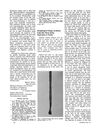 47 citations
,
July 1967 in “Science”
47 citations
,
July 1967 in “Science” Not eating enough protein can cause hair roots to shrink and lose color, and hair to become thinner.