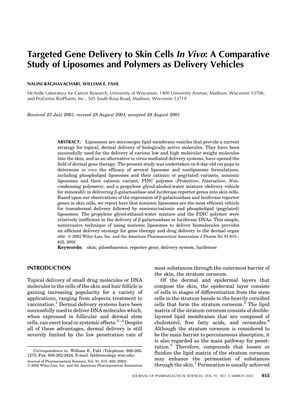
TLDR Nonionic liposomes are the best for delivering genes to skin cells.
The study conducted on 6-day-old rat pups compared the effectiveness of various liposome and nonliposome formulations for delivering beta-galactosidase and luciferase reporter genes into skin cells. The results indicated that nonionic liposomes were the most efficient vehicle for transdermal gene delivery, outperforming nonionic/cationic and pegylated phospholipid liposomes. In contrast, a propylene glycol:ethanol:water mixture (used for minoxidil delivery) and PINC polymers were less effective in delivering the genetic material. This research suggests that nonionic liposomes offer a promising method for gene therapy and drug delivery to the skin.

60 citations
,
February 1997 in “Journal of Dermatological Science” Liposomes can safely and effectively deliver substances to mouse hair follicles, potentially useful for human hair treatments.
43 citations
,
April 1996 in “Journal of Investigative Dermatology”
421 citations
,
January 2015 in “Chemical Society Reviews” Improving artificial vascular grafts requires better materials and surface designs to reduce blood clotting and support blood vessel cell growth.
26 citations
,
January 2024 in “Gels” Nanoemulgels could effectively treat skin diseases and may replace or complement current therapies.
December 2013 in “Biomedical and biopharmaceutical research” Nanotechnology shows promise for better drug delivery and cancer treatment.
54 citations
,
June 2020 in “Pharmaceutics” New nanocarriers improve drug delivery for disease treatment.
5 citations
,
February 2022 in “Acta Biomaterialia” Nanomaterials can improve hair care products and treatments, including hair loss and alopecia, by enhancing stability and safety, and allowing controlled release of compounds, but their safety in cosmetics needs more understanding.