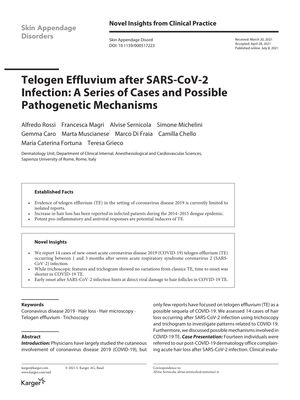
Telogen Effluvium After SARS-CoV-2 Infection: A Series of Cases and Possible Pathogenetic Mechanisms

    January 2021 in “ Skin appendage disorders
    Alfredo Rossi, Francesca Magri, Alvise Sernicola, Simone Michelini, Gemma Caro, Marta Mellai, Marco Di Fraia, Camilla Chello, Maria Caterina Fortuna, Teresa Grieco
    Image of study
    TLDR COVID-19 may cause early hair loss similar to classic temporary hair loss, with further research needed.
    The document reports on a study of 14 cases where patients experienced telogen effluvium (TE), a temporary form of hair loss, within 1 to 3 months after being infected with SARS-CoV-2, which is earlier than the typical 3-4 months for classic TE. The median duration of hair loss was 5 months, with clinical evaluations showing no variations from classic TE. The authors propose that the early onset of TE could be due to direct viral damage or the intense release of pro-inflammatory cytokines caused by SARS-CoV-2 infection, and they also consider antibody-dependent enhancement (ADE) as a potential mechanism. The study concludes that TE could be a sequela of COVID-19 and highlights the need for further research with a larger sample size to understand the condition better. The research was conducted with informed consent, no conflicts of interest, and no external funding.

    Discuss this study in the Community →

    Research cited in this study

    9 / 9 results

    Related Community Posts Join

    6 / 697 results

      community Telogen Effluvium/Chronic TE and immune-related hair loss advice

       4 upvotes 7 years ago
      Chronic Telogen Effluvium can be managed by avoiding inflammatory foods, exercising, staying hydrated, and using supplements like krill oil, saw palmetto, or licorice root. Minoxidil is discouraged due to its cost and potential for worsening hair loss, while castor oil is recommended to strengthen hair roots and reduce shedding.

      community My Telogen Effluvium journey after a bad Keratin Treatment

      in Female  6 upvotes 2 years ago
      A user shared their experience with telogen effluvium triggered by a keratin treatment, leading to significant hair loss. They found improvement using aloe vera with rosemary, a protein and iron-rich diet, and patience.

      community Been diagnosed with telogen effluvium and MPB

      in Chat  3 upvotes 5 months ago
      A 21-year-old male diagnosed with telogen effluvium and male pattern baldness started oral finasteride, which initially slowed hair loss and slightly thickened hair, but experienced increased shedding after surgery. The doctor recommended iron and vitamin D supplements, and the user is seeking additional advice.

      community Is 2years+ telogen effluvium possible?

      in Finasteride/Dutasteride  2 upvotes 1 year ago
      The user has been losing hair for over two years despite taking dutasteride and RU58841, even increasing dutasteride to 2.5mg. They are questioning if their hair loss could be due to telogen effluvium instead.

    Similar Research

    5 / 1000+ results