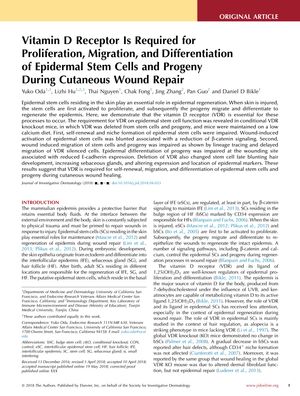
TLDR The vitamin D receptor is essential for skin stem cells to grow, move, and become different cell types needed for skin healing.
The study demonstrated that the vitamin D receptor (VDR) is crucial for the proliferation, migration, and differentiation of epidermal stem cells and their progeny during skin repair. Conditional VDR knockout mice, which had VDR deleted from their stem cells and progeny and were on a low calcium diet, showed impaired self-renewal and niche formation of epidermal stem cells. Additionally, these mice exhibited reduced β-catenin signaling, delayed stem cell migration, and impaired differentiation at wound sites, as evidenced by decreased E-cadherin expression. The absence of VDR also altered stem cell fate, leading to hindered hair development, increased sebaceous glands, and changes in the expression and location of epidermal markers. These findings indicate the essential role of VDR in epidermal stem cell function during the wound healing process.
86 citations
,
August 2015 in “The Journal of Steroid Biochemistry and Molecular Biology” Vitamin D and calcium are essential for effective wound healing and hair growth.
 321 citations
,
March 2015 in “Nature”
321 citations
,
March 2015 in “Nature” Super-enhancers controlled by pioneer factors like SOX9 are crucial for stem cell adaptability and identity.
 173 citations
,
January 2014 in “Nature Cell Biology”
173 citations
,
January 2014 in “Nature Cell Biology” Wnt signaling controls whether hair follicle stem cells stay inactive or regenerate hair.
 57 citations
,
January 2014 in “Cold Spring Harbor Perspectives in Medicine”
57 citations
,
January 2014 in “Cold Spring Harbor Perspectives in Medicine” Skin stem cells maintain and repair the outer layer of skin, with some types being essential for healing wounds.
56 citations
,
November 2012 in “Endocrinology” Vitamin D receptor is essential for proper skin healing after injury.
 156 citations
,
October 2012 in “Seminars in Cell & Developmental Biology”
156 citations
,
October 2012 in “Seminars in Cell & Developmental Biology” Different types of stem cells in hair follicles play unique roles in wound healing and hair growth, with some stem cells not originating from existing hair follicles but from non-hair follicle cells. WNT signaling and the Lhx2 factor are key in creating new hair follicles.
 191 citations
,
September 2011 in “Cell stem cell”
191 citations
,
September 2011 in “Cell stem cell” Hair follicle stem cells use specific chromatin changes to control their growth and differentiation.
 185 citations
,
June 2011 in “Molecular and cellular endocrinology”
185 citations
,
June 2011 in “Molecular and cellular endocrinology” Skin cells produce and activate vitamin D, which regulates skin functions and supports hair growth.
127 citations
,
January 2008 in “PloS one” Vitamin D receptor helps control hair growth and could be used to treat certain skin tumors.
143 citations
,
May 2007 in “Proceedings of the National Academy of Sciences” Vitamin D receptor is crucial for normal hair growth and preventing hair loss.
1279 citations
,
November 2005 in “Nature Medicine”