TLDR A single amino acid change in the vitamin D receptor can disrupt its function and lead to hair loss.
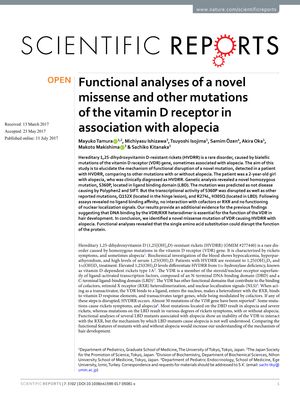
This study investigated a novel mutation, S360P, in the vitamin D receptor (VDR) gene associated with hereditary 1,25-dihydroxyvitamin D-resistant rickets (HVDRR) and alopecia in a 2-year-old girl. Despite predictions that S360P was not disease-causing, functional analyses showed disrupted transcriptional activity similar to other mutations like Q152X, R274L, and H305Q. The mutation led to a lack of ligand binding affinity, no interaction with cofactors or RXR, and impaired nuclear localization signals. The findings supported the importance of DNA binding by the VDR/RXR heterodimer for VDR function in hair development, highlighting that a single amino acid substitution could significantly disrupt protein function.

28 citations
,
January 2012 in “Biological & pharmaceutical bulletin” Hairless protein can both repress and activate vitamin D receptor functions, affecting gene regulation.
109 citations
,
June 2011 in “Molecular and Cellular Endocrinology” Vitamin D receptor mutations can cause alopecia by affecting hair growth genes.
76 citations
,
January 2010 in “Journal of bone and mineral metabolism” 50 citations
,
September 2009 in “Molecular Genetics and Metabolism” A new gene mutation causes vitamin D resistance and rickets, treatable with calcium therapy.
144 citations
,
December 2004 in “Molecular Endocrinology” The vitamin D receptor is essential for normal hair growth, even without its usual binding.
36 citations
,
January 2010 in “Journal of Pediatric Endocrinology and Metabolism” A new gene mutation causes vitamin D resistance and hair loss in two unrelated girls.
50 citations
,
September 2009 in “Molecular Genetics and Metabolism” A new gene mutation causes vitamin D resistance and rickets, treatable with calcium therapy.
10 citations
,
January 2014 in “Journal of Pediatric Endocrinology and Metabolism” Three new gene mutations cause rickets and hair loss, treatable with high calcium and calcidol, but hair regrowth is rare.
47 citations
,
February 1998 in “Journal of bone and mineral research” A specific gene mutation causes vitamin D-resistant rickets and hair loss.
24 citations
,
November 2008 in “Arquivos Brasileiros de Endocrinologia & Metabologia” Four patients with a type of rickets and hair loss had different mutations in their vitamin D receptor gene, causing it to not work properly.
25 citations
,
August 2014 in “Endocrinology” Researchers created a mouse model of a type of rickets that does not cause hair loss.