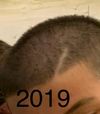
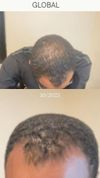
The user reported hair thickening and new growth after using minoxidil and microneedling for over three months. They are considering finasteride but have not started it yet.
A user's 3-month progress report on their treatment of hair loss using a stack of finasteride, dutasteride, and minoxidil, with additional supplements, diet and workout routine, and before-and-after photos.
The user is concerned about their receding hairline and is using Revita Extra Strength Shampoo, derma stamping every two weeks, and applying 5% minoxidil daily. They are seeking advice on whether to change their routine.
A user who has been using Pyrilutamide for 19 days, experiencing some hair thickening in the right temple and crown area but also having ball ache after microneedling; other users offer advice, caution and skepticism as to whether results can be seen in such a short time.
Topical finasteride with minoxidil can be effective but may not match oral finasteride results, with less absorption into the bloodstream. Shedding is common when starting or stopping minoxidil and finasteride, and adding dutasteride and tretinoin can enhance effectiveness by improving absorption and DHT inhibition.
Microneedling may not significantly help those who don't respond to topical minoxidil, and some users suggest trying oral treatments like oral minoxidil or finasteride. Concerns about scarring and side effects are noted, with mixed experiences reported.
The user experienced hair loss and used a topical minoxidil and finasteride solution, which initially halted hair fall and increased thickness. After switching to oral finasteride, they experienced significant shedding without regrowth, leaving them worse off than before.
The user is considering switching from oral to topical minoxidil and possibly adding finasteride, while continuing with dutasteride and incorporating microneedling to improve hair loss treatment. They are concerned about potential shedding during the transition.
The user has been on dutasteride for 6 months, experiencing initial hair health but then shedding and brittle hair, with no improvement. They use minoxidil, ketoconazole, dutasteride, and vitamin D, and are questioning whether to continue treatment despite no results.
A user shared their hair regrowth progress using Dutasteride, topical Minoxidil, Spironolactone, and Estradiol Valerate injections as part of hormone replacement therapy for transitioning. They experienced significant hair improvement and personal satisfaction but caution against this approach for non-transitioning individuals due to irreversible changes.
The user is using minoxidil, finasteride, dutasteride, and clobetasol, along with needling, to combat hair loss. They are considering stopping treatment if no improvement is seen.
Using topical finasteride alongside oral finasteride likely won't provide significant benefits and may increase the risk of side effects. The "4-in-1" spray offers a higher minoxidil concentration but may not be worth switching if oral finasteride is well-tolerated.
A 40+ male shared his one-year progress using minoxidil twice daily and microneedling once a week, showing significant hair improvement. He also occasionally uses finasteride in a low dosage due to side effects.
The conversation discusses hair loss treatments, specifically using topical finasteride and minoxidil combined with microneedling, along with supplements like collagen, vitamin C/D, and saw palmetto. The user also mentions using a DHT-blocking shampoo and experimenting with cold showers and contrast therapy for hair health.
Using Stemoxydine, a hair growth promoter, in conjunction with Fin and Minoxidil to help counter shedding induced by the latter two treatments. Another user also shared their experience of using Stemoxydine for three months along with dermastamp.
A user who had taken oral minoxidil for 6 months without seeing any results and the advice given in response, which included trying microneedling in combination with topical minoxidil, as well as seeking a dermatologist's opinion.
A user is starting a microneedling regimen for hair loss, using Derminator 2, ketoconazole shampoo, castor oil, and multivitamins. They plan to provide monthly updates on their progress.
User made progress with topical Finasteride/Minoxidil and topical Dutasteride for hair loss. Microneedling at 1.5mm daily was also mentioned as part of the treatment.
The user has used finasteride and minoxidil for 300 days and is considering a hair transplant. Others recommend continuing medication, possibly switching to dutasteride, and waiting longer before deciding.
A user shared his experience of having two healthy children while continuously using finasteride (Fin) for hair loss, challenging fears about its potential impact on fetal development. The discussion that followed included various perspectives, with some users sharing similar experiences, others expressing concerns about potential risks, and some emphasizing the need for more substantial evidence before drawing conclusions.
A user's experience with hair loss treatments, specifically Minoxidil and finasteride, which they have used without side effects for a year. Other users shared their experiences and advice about potential side effects and supplements to help.
A 23-year-old male has been using a regimen including oral Dutasteride, topical Minoxidil, Azelaic acid gel, Ketoconazole shampoo, and microneedling for 4 months with minimal results. Another user suggests that it typically takes a year to see significant effects and encourages him to continue the routine.
The user is using a routine involving microneedling, Minoxidil with tretinoin, a red light cap, scalp massages, Nizoral shampoo, and essence oil shampoo to address hair loss, with visible progress noted. They are considering topical finasteride or dutasteride if progress slows but are cautious due to past side effects.
The user has seen great results from microneedling but is worried it might lead to faster balding without medication. They are considering adding Finasteride or Dutasteride to their routine to address underlying DHT issues.
A 32-year-old man with advanced hair loss is using topical finasteride, minoxidil, and dutasteride but sees no results after three months. Suggestions include adding a dermastamp and waiting 12 months, with the possibility of considering a hair transplant.
The user has tried various hair loss treatments, including minoxidil, finasteride, ketoconazole, biotin spray, oral medications, and a Revian cap, but has not seen lasting improvement. They are considering stopping treatments and are frustrated with the lack of progress and the financial and emotional toll.
User is using topical Minoxidil (100 mg/day) and Finasteride (1 mg/day) but experiencing hair growth everywhere except the top of the scalp. They seek advice on improving scalp hair regrowth.
The conversation is about using Peppermint or Spearmint oil for hair loss and asks for successful regimens, including brands, carrier oils, and application details. No specific treatments were shared.
The user has been using a finasteride and minoxidil combo spray from Hims for four months, with positive results and no side effects. They apply four sprays nightly, targeting the crown and front of the scalp.
The user regrets stopping finasteride and minoxidil due to side effects but plans to resume treatment. They consider using finasteride every other day and continuing topical minoxidil to manage side effects while maintaining hair.