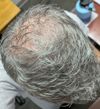
A user's hair regrowth journey involved a hair transplant and using RU58841, finasteride, and minoxidil, with side effects managed by other medications.
A 31-year-old male switched from topical to oral Minoxidil (2.5 mg) and Finasteride (0.6 mg) but feels it's less effective, noticing less hair density and thickness. He is concerned about the effectiveness of the oral treatment compared to the previous combination with topical Minoxidil.
The user experienced significant hair regrowth using 0.5mg dutasteride and 5mg oral minoxidil, with fewer side effects compared to finasteride. They noticed improvements in hair thickness and hairline, despite intermittent use of performance-enhancing substances.
The user is experiencing increased hair shedding after starting Dutasteride 0.5mg, Minoxidil 2.5mg, and Biotin 10mg, which is considered a normal response indicating the treatment is working. Another user shared a similar experience with Finasteride, noting initial shedding followed by regrowth, and mentioned switching to Dutasteride to avoid side effects.
The user experienced hair regrowth after 3 months using 2.5mg oral minoxidil and 0.5mg dutasteride daily, along with 2% ketoconazole shampoo, rosemary oil, and microneedling. They initially used finasteride before switching to dutasteride and noticed shedding between weeks 2 and 6.
A user underwent a 2,550 FUE hair transplant and started taking dutasteride 0.5mg. They previously tried RU58841, minoxidil, and microneedling but avoided finasteride and dutasteride due to side effects.
A user's results after two months of using Dutasteride and Minoxidil, alongside other treatments such as multivitamins, derma rolling, finasteride, topical minoxidil, Nizoral shampoo, Pyrithione zinc shampoo, hair vitamins, and rosemary oil. People in the conversation shared encouragement and discussed their own regimens for treating hair loss.
A 28-year-old male, losing hair since his teens, started taking 0.31 mg finasteride daily for two weeks with no side effects and regrets not starting earlier. He tried various treatments like minoxidil, scalp massages, and vitamins but found finasteride most effective.
A user is taking 2.5 mg oral Minoxidil and was prescribed a topical oil with Minoxidil 8%, Dutasteride 0.05%, and Finasteride 0.5%. They are seeking opinions on whether this combination is excessive or appropriate.
A 23-year-old shared progress pictures after five months on Finasteride, starting with 0.25mg and increasing to 1mg, reporting no side effects and noticeable hair improvement. The user is satisfied with the results and plans to continue the treatment, while others in the conversation discuss dosage, side effects, and alternative treatments.
Dutasteride users report mixed results, with some experiencing shedding and others seeing no improvement or hair regrowth. Many users also discuss using finasteride and minoxidil, with some preferring topical treatments for better results.
The user is documenting their experience with oral dutasteride (dut) 0.5 mg and minoxidil (min) 5 mg for hair loss, planning to add RU58841 after three months. They previously used finasteride with success and are now experiencing increased shedding but also new hair growth.
The conversation discusses hair regrowth progress using dutasteride 0.5 mg and oral minoxidil 2.5 mg over seven months. Users debate the effectiveness, with some noting slight improvements and others suggesting alternative treatments like finasteride.
Taking dutasteride daily at higher doses results in more effective DHT suppression compared to every other day dosing, due to its dose-dependent nature and long half-life. Even at lower doses, dutasteride is more effective than finasteride for hair loss.
A user asks about the appropriate zinc dosage to offset side effects while taking 0.5 mg of finasteride daily. Responses suggest zinc has a minor effect on hormones compared to finasteride.
A 41-year-old male is experiencing rapid hair loss at the crown and is considering starting finasteride and topical minoxidil. He is unsure whether to begin with 1mg or 0.5mg of finasteride and whether to delay using minoxidil.
The conversation discusses the effectiveness of various doses of Dutasteride in reducing scalp DHT and its impact on hair count. Users shared personal experiences with hair loss treatments, including Dutasteride, Finasteride, and Minoxidil, with one reporting significant hair loss reduction using a combination of oral Dutasteride and topical Minoxidil and Finasteride.
Significant hair regrowth was achieved using 1 mg Finasteride, 5% Minoxidil, and dermarolling, with a switch from a 0.5 mm to a 1 mm roller after two months. The user is happy with the results but is still considering a hair transplant for more density.
Dutasteride and finasteride are effective for many in reducing hair loss by lowering DHT levels, though results vary based on individual sensitivity and genetics. Higher doses of dutasteride may not significantly increase hair growth due to diminishing returns, and topical finasteride is suggested as an alternative for some.
A 21-year-old male experiencing hair thinning and shedding was diagnosed with androgenetic alopecia and prescribed a topical solution containing 5% minoxidil and 0.1% finasteride, multivitamins, and 0.5mg dutasteride daily. He seeks confirmation on whether this prescription is typical for his condition.
The conversation discusses hair loss treatments, specifically using Dutasteride 0.5 mg and topical Minoxidil 5% twice daily, with users sharing experiences and advice on using Finasteride and Minoxidil. Some users consider hair transplants, while others suggest giving medications more time to work.
A 20-year-old is using 5% minoxidil and 0.1% dutasteride foam, along with oral 2.5 mg minoxidil, Forcapil, vitamin D3, and Alpecin shampoo for hair loss, noticing new hair growth and improved hair density. They previously tried finasteride but stopped due to side effects.
A 24-year-old male shared his 5.5-year progress using minoxidil and nearly 5 years on finasteride/dutasteride for hair loss, reporting no side effects and successful results. He uses 0.5 mg dutasteride daily, oral minoxidil 2.5 mg daily, and topical minoxidil daily, with costs around $4 monthly.
A 29-year-old male is using topical minoxidil and microneedling for hair regrowth and is considering adding finasteride. Users suggest adding finasteride for better results.
A 50-year-old user shared progress after one year on oral finasteride 1mg/day, oral minoxidil 2.5mg/day, and ketoconazole shampoo, with no side effects, but plans to switch to dutasteride 0.5mg/day due to recent hair loss. Other users commented on the visible improvement and discussed the potential impact of switching treatments.
A user's 18-month progress on their hair loss treatment regimen, which includes 5mg oral minoxidil, 1.5mm microneedling with a pen once weekly, and 0.5mg/day dutasteride; other users noted the positive effects of finasteride and dutasteride in reducing DHT levels.
A 29-year-old man shows 3 months of hair regrowth using minoxidil 5%, oral dutasteride 0.5mg every other day, and occasional microneedling after overcoming fears about finasteride side effects. He is optimistic about further improvement.
The user experienced hair regrowth after 10 months using Minoxidil, 2.5 mg Dutasteride, and 0.5 mgFinasteride. They switched from a compounded pill to Avodart capsules and plan to reassess their treatment after one year.
Dutasteride at 0.5 mg and 2.5 mg doses may eventually yield similar hair growth results over time, with 0.5 mg being sufficient for many users. Higher doses may not significantly increase benefits and could lead to diminished returns.
The conversation is about using dutasteride 0.5mg, minoxidil 5%, and RU58841 for hair loss treatment. Users discuss dosage, potential side effects, and experiences with these treatments.