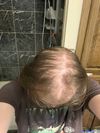
The conversation discusses the use of 12.5mg cyproterone every other day for hair loss. There's a concern about reducing testosterone potentially increasing DHT and negatively affecting hair.
The conclusion of the conversation is that the user has experienced significant hair regrowth using a combination of medications, including dutasteride, RU58841, and minoxidil. They have not experienced any noticeable side effects and are considering a hair transplant in the future.
The user experienced better hair thickening results with a combination pill of oral minoxidil (3mg) and finasteride (1mg) compared to previous treatments with topical minoxidil and finasteride alone. They reported no significant side effects and expressed regret for not starting this treatment earlier.
A 23-year-old male shares his 136-day progress using a hair loss treatment regimen of daily Dutasteride 0.5mg, topical Minoxidil 5% with Tretinoin, and Nizoral every other day, reporting no side effects and significant hair regrowth. He notes high energy and libido, with no shedding, and attributes most progress to Dutasteride.
A 27-year-old male is using a hair loss treatment regimen including topical minoxidil, oral finasteride, dermarolling, ketoconazole shampoo, and mesotherapy with dutasteride and vitamins. He is considering switching to oral dutasteride as recommended by his doctor and questions the necessity and cost of mesotherapy.
A 16-year-old girl is experiencing hair loss, which has worsened despite using minoxidil and multivitamins. Suggestions include broader hormone testing and considering other treatments like spironolactone if the hair loss is due to androgenic alopecia.
A 16-year-old is experiencing thinning hair at the front and shedding during showers. He is concerned about potential early baldness and is considering seeing a doctor and taking multivitamins.
The user is experiencing erectile dysfunction and decreased sperm quality from using Dutasteride for hair loss and is considering stopping it to improve fertility. They are exploring other treatments like Viviscal Men, Minoxidil, Revlan Red System, Fluridil, Nizoral, Stemoxydine, and Eucapil.
Clascoterone 5% topical solution is effective and safe for long-term use in treating male pattern hair loss. Cosmo Pharma aims for EU and US approval, with a potential US release in late 2027 or early 2028.
The conversation discusses a botanically derived treatment for androgenetic alopecia using ingredients like saw palmetto, green tea, and evening primrose, showing impressive results over 270 days. Concerns include the study's uncontrolled nature and potential product motivation, with suggestions to enhance absorption through derma rolling.
The conversation is about which blood markers to test before starting a 5-AR inhibitor for hair loss. The user mentions already testing Total T, Free T, SHBG, Estradiol, Haematocrit, Red blood cell count, and White cell count, and asks if DHT or additional markers are needed.
A hair loss regimen involving Dutasteride, Oral Minoxidil, Mesotherapy, Topical Minoxidil/Finasteride, RU58841, Alfatridiol, Microneedling, LLLT, Keto shampoo, Vitamin K/D/Fish oil/Borage Oil/MSM, Oral Castor oil and Niacin. It also mentions products that have been dropped from the regimen due to not being worth the hassle or messing with libido.
Clascoterone (Breezula) showed positive results for treating hair loss without affecting cortisol levels. Opinions vary, with some users optimistic about its potential and others critical of its effectiveness compared to existing treatments like finasteride.
The user reported significant hair improvement over 15 months using dutasteride, minoxidil (oral and topical), RU58841, ketoconazole, and microneedling. They are considering a hair transplant in 4-6 months.
Breezula's effectiveness is uncertain, with some users skeptical about its potential and others noting its recent availability on the grey market. A user reported success with a stack of Dutasteride (oral), Minoxidil (topical), and RU58841 (topical), achieving significant hair improvement after 18 months.
The user is considering adding an anti-androgen, RU58841, to their current hair loss treatment routine due to receding hair. They are also contemplating waiting for Breezula or Pyrilutamide to become more affordable.
A 26-year-old is taking 1mg finasteride for hair loss prevention, experiencing side effects like low libido, and considering adding minoxidil but is hesitant. Users suggest sticking with finasteride, possibly adjusting the dosage, and incorporating scalp massages or microneedling to improve results.
Ursolic acid, found in apple peels, lemongrass, rosemary, and lavender, may have anti-androgen effects similar to finasteride. It might be beneficial for hair health when used with other treatments like Minoxidil, Finasteride, and RU58841.
A 20-year-old user experienced worsening hair loss despite using various treatments including topical and oral minoxidil, finasteride, and dutasteride. Other users suggested additional treatments like JAK inhibitors, RU58841, and lifestyle changes, but the user remains skeptical and frustrated.
The user has been using 1.25 mg of oral minoxidil and finasteride since September 2025 to address diffuse hair thinning, and is considering trying a new shampoo. Other users suggest increasing the minoxidil dose and trying dutasteride.
A 20-year-old male shares his 2.5-month progress using 1mg finasteride, topical minoxidil, tretinoin, dermarolling, and ketoconazole for hair loss, noting slight libido decrease. Users discuss sourcing topical finasteride and request more photos to see the results.
The user is concerned about high DHT levels despite using finasteride and dutasteride for hair loss, suggesting these treatments may not be effective. They plan to consult an endocrinologist and consider other antiandrogens, acknowledging potential side effects.
The conversation is about a person using dutasteride and minoxidil for hair loss, considering adding RU58841 and PP405 for more density. They are seeking advice on using these treatments and exploring other options like GT20029.
The user is experiencing low libido and mood swings after starting a low dose of topical finasteride. They are considering further blood tests to investigate low testosterone levels and other hormonal factors.
A user with low-normal testosterone levels is considering starting finasteride and minoxidil for hair loss but is concerned about hormone imbalance. They are advised that finasteride targets DHT, not testosterone, and could start with minoxidil while making lifestyle changes to naturally increase testosterone.
A 21 year old who has been taking various treatments for hair loss such as dutasteride, RU58841, minoxidil and finasteride with no results. Other users share their experiences of dealing with hair loss at an early age and offer advice on how to cope.
A user is considering switching from finasteride to dutasteride for hair loss at age 21, worried about potential side effects on bone and brain development. Another user shared their positive experience with dutasteride, noting minimal body hair and no side effects.
A 19-year-old using topical minoxidil and dutasteride reports significant hair growth and shedding. Minoxidil caused new facial hair growth, and the user hopes for thicker hair regrowth.
A 23-year-old male reported significant hair improvement using 0.5 mg finasteride and 2.5 mg minoxidil daily, along with 0.5 mg dutasteride twice a week. He noticed increased hair thickness, density, and darker color, attributing the changes mainly to oral minoxidil and DHT blockers.