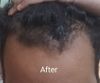
Minoxidil, finasteride, and RU58841 are discussed as treatments for hair loss. The conversation questions the effectiveness and patience required for these treatments.
The user experienced hair regrowth with finasteride and minoxidil but faced shedding after stopping the treatment. They resumed the treatment and used Toppik hair fibers to mask hair thinning during the shedding phase.
A 23-year-old male has been using topical finasteride and minoxidil for 2 years and switched to oral minoxidil in January. He is considering whether to get a hair system or a transplant.
A 17-year-old has been using Minoxidil for 3 months and dermastap for 2 weeks but feels they are losing progress. A suggestion was made to add finasteride 1 mg three times weekly.
The user has been using finasteride three times a week for a year and plans to add minoxidil to improve hair regrowth. They are seeking opinions on any noticeable new hair growth.
FCE 28260 (PNU 156765), an under-explored 5α-reductase inhibitor, showcases promising results in research by Giudici et al., outperforming well-known treatments like Finasteride in reducing the conversion of testosterone to DHT. Its superior efficacy, demonstrated through lower IC50 values in both natural and human recombinant enzyme studies, suggests it could offer more effective management of DHT-related conditions. Additionally, its lower molecular weight hints at better potential for topical application, potentially offering advantages in treating conditions such as androgenic alopecia. Despite its potential, it has not advanced in development, possibly due to financial limitations, leaving its therapeutic prospects and side effect profile largely unexplored.
User shared 9 months of progress using 1 mg finasteride and topical minoxidil, showing photos from different stages. Encouragement was given to continue the treatment.
The conversation is about treatments for androgenetic alopecia, focusing on hyperresponders. Treatments include Minoxidil, finasteride, RU58841, leg training, and cold therapy.
A user shared their hair regrowth progress after using minoxidil 5% twice daily since January 31 and adding oral dutasteride 0.5mg and minoxidil 2mg daily two weeks ago. They also used microneedling occasionally and are seeking opinions on potential further gains.
A user with early-stage diffuse hair thinning asked for long-term success stories using treatments like finasteride, minoxidil, and RU58841. One person regained most of their hair after 22 months on finasteride and minoxidil, while another saw significant improvement with oral minoxidil after trying various treatments over many years.
The user is experiencing gradual hair growth using 5% minoxidil, 0.01% finasteride, vitamins, capixyl serum, niacin, and weekly microneedling, with plans to increase finasteride dosage. Despite some side effects, they remain optimistic about hair transplant results, focusing on the crown and temples.
Microneedling can cause infections if not done carefully; users suggest using alcohol swabs and reducing needle depth to avoid issues. Proper sanitation and gentle pressure are key to preventing bleeding and infection.
Hair loss in your 20s, with treatments like minoxidil, finasteride, dutasteride, and hair transplants discussed. Opinions vary between accepting baldness and pursuing aggressive treatments.
The user experienced hair loss and initially saw improvement with Finasteride but is now considering switching to Dutasteride due to lack of recent results. They plan to add topical Minoxidil and are awaiting biopsy results to determine the cause of hair loss.
The user experienced hair regrowth and stopped hair loss using a natural DHT blocker and later finasteride, despite initial side effects. They plan to add topical minoxidil to address remaining thin spots.
OP experienced diffuse thinning for 11 years and used Minoxidil and Finasteride previously. They now use Pyrilutamide 0.5% and Alfatradiol 0.1%, resulting in significantly reduced hair loss.
A user shared their disappointing results after 1.5 years of hair treatments, including a hair transplant, finasteride, minoxidil, PRP, vegan shampoo, and more. They are considering switching to dutasteride, oral minoxidil, and improving their microneedling routine.
The conversation is about a user who got a perm after successfully treating their thinning hair, with mixed reactions from others on the appearance. Specific treatments used are not mentioned.
A female user starting Spironolactone treatment for thinning hair, and others sharing their experiences with Minoxidil and oral/sublingual Minoxidil as treatments.
A user who, after experiencing hair loss 4 years ago, used topical minoxidil for some good results. Two years later, finasteride was added with limited success. After consulting a dermatologist, dutasteride and oral minoxidil were introduced to the treatment plan; after two months of use, there have been notable improvements in both density and quality of hair as well as less shedding.
A user reported positive results with 0.5mg Dutasteride for 9 months, experiencing thicker hair and some regrowth. After stopping due to side effects, they noticed hair loss resuming and are now considering a reduced dosage and mesotherapy with Dutasteride, Minoxidil, and vitamins.
Celery juice is discussed as a potential treatment for crown balding, with skepticism from users. The conversation highlights differences between alopecia areata and male pattern baldness.
The conversation discusses the steps for microneedling, specifically differentiating between medical needling (0.5-1.5mm) and cosmetic needling (0.3mm). It emphasizes the importance of cleaning and disinfecting before microneedling, regardless of needle length.
A 36-year-old is experiencing underwhelming results from derma stamping for hair thinning, using needle lengths of 0.5mm to 0.75mm. They are considering increasing needle length, taking a break, or pairing the treatment with rosemary oil.
The user is experiencing thicker hair after using oral minoxidil, dutasteride, biotin, collagen shampoo with rosemary, and ketoconazole. They are considering adding a derma roller to their regimen for potential benefits.
Microneedling with needle lengths of 1.5mm to 2.5mm to stimulate hair follicle stem cells for potential hair growth. Using needles longer than 2.5mm is not recommended due to risk of puncturing veins in the scalp. A dermastamp is suggested over a roller.
The user is experiencing hair regrowth after 4.5 months of using oral minoxidil, oral dutasteride, latanoprost, ketoconazole shampoo, and dermarolling. They report shedding initially but have seen improvement without significant side effects.
The user shared progress pictures showing significant hair regrowth using Minoxidil and a dermapen, expressing concerns about potential side effects of finasteride due to low testosterone levels. Another user reported increased testosterone and no side effects from finasteride, with improved libido.
A user shared progress pictures after 5.5 months of using finasteride, minoxidil foam, vitamin D3, and ketoconazole shampoo for hair loss but hasn't seen progress yet. They are advised to wait a year before considering additional treatments like dutasteride.