Search
for
Sort by
Community Join
570-600 / 1000+ resultscommunity Topical fin min - 2 months regrowth
community Any long term RU55841 / CB-03-01 / Eucapil users here?
Hair loss treatments RU55841, CB-03-01, and Eucapil were discussed, with concerns about needing increased dosages over time and potential side effects. A user suggested that CB's results could be due to various factors and that combining it with finasteride might slow down any upregulation.
community 4 years ago (top) vs today (bottom) 1mg Finasteride daily
community 2 month update Exosomes
A user's two month update on their hair loss journey and the treatments they are trying, which include exosome injections, minoxidil, finasteride, and RU58841.
community One year results on Big 3 + Dermaroll (32y/o NW7)
A user who experienced significant hair regrowth over the course of one year by following a regimen including finasteride, minoxidil, Nizoral shampoo, dermarolling, biotin vitamins, vitamin D3 and collagen peptides. The post includes before/after photos and details on the brands used.
community Breezula(CB)Phase3Results Date
Breezula's phase 3 results are expected in July or August, with commercialization possibly in two years. There are concerns about delays and effectiveness, and the cost may be high.
community 5 months update: 5mg dut, 5mg biotin, trop min 5% 2x day, dermaroll 1-2x week
OP is using 0.5mg dutasteride, 5mg biotin, 5% topical minoxidil twice daily, and dermarolling 1-2 times a week for hair loss. OP reports no side effects and is happy with the progress after 5 months.
community Finasteride Worries
community How to add stemoxydine into my routine
community ghk-cu is potent 5-ar inhibitor?
GHK-Cu is a potent inhibitor of the type 1 5-alpha reductase enzyme in hair follicles, which may reduce hair loss without the side effects associated with type 2 5-alpha reductase inhibitors. The user previously experienced side effects with 5-alpha reductase inhibitors and is considering GHK-Cu as an alternative.
community 3 Month Results with Nuclear Stack - 42M
A user shared 3-month hair regrowth results using a combination of oral Dutasteride, daily Minoxidil, RU58841, micro-needling, Keto shampoo, scalp massages, and supplements. Positive progress was noted, and encouragement to continue was given.
community Published in Nature: Osteopontin, a protein involved in the growth of hair on moles could be the key to our troubles.
Osteopontin, a protein involved in hair growth on moles, may help with hair loss. However, it is also linked to Alzheimer's, cancer, and bone development, so caution is advised.
community Rate my MPB Genetics: Can I run Primobolan/Masteron? (Detailed MyHeritage DNA Data Included)
The user is using testosterone and finasteride to prevent hair loss and is considering adding Primobolan or Masteron, which are DHT-derivatives. They are seeking advice on their genetic risk for male pattern baldness and whether they can safely use these compounds without significant hair loss.
community What is everyone's assessment of pyrilutamide 1.0% topical as a adjunct treatment?
community Fin(pill) RU(top) ED dermarolling 2x Week
community Hair Multiplication Projects in China - Promising clinical trial results on Mice
A breakthrough in hair follicle cultivation using induced pluripotent stem cells (iPSCs) has been achieved, producing large hair follicles suitable for transplantation. Clinical trials for this hair multiplication technology are planned in partnership with Yinguan Biotechnology.
community Finasteride topical formulation (pharmacy vs stemoxydine)
Hair loss discussion includes treatments like hinoki tree oil and procyanidin b2. Experiences and effectiveness of these treatments are shared.
community Are there any active Group Buys (dischord or other forums) for HMI 115?
Hair loss discussion includes treatments Minoxidil, Finasteride, and RU58841. HMI 115 shows anecdotal success in Phase I trial, users seek group buy for research chemical.
community Anyone used injectable GHK-CU or BPC157 for hair?
Injectable GHK-CU and BPC157 were discussed for hair loss, but users did not notice significant hair changes. BPC157 was noted to help with shoulder issues.
community Where to get ru58841 in middle Europe?
community Experiences maintaining hair on alfatradiol?
community I want to prepare a Topical Catalase with Phosphate Buffered Saline Solution.
The conversation discusses creating a topical catalase solution with phosphate buffered saline, glycerin, and polysorbate 20 for hair loss treatment. The user seeks advice on preparing this solution.
community Possible solution: 2.5mg DUT for everyone
A user is experimenting with creating a DIY oral Dutasteride solution using raw powder, MCT oil, and Vitamin E to reduce costs. Others discuss their experiences with similar methods and the challenges of sourcing and testing Dutasteride.
community Bicalutamide vs Finasteride for female AGA plus TE
OP is considering Bicalutamide for female AGA and TE but is concerned about its side effects and effectiveness compared to Finasteride. OP is also using Minoxidil and Spironolactone but is experiencing significant shedding and is unsure if it's androgen-driven or due to Minoxidil changes.
community The Upcoming Big 3 in Future..
Hair loss treatments discussed: GT 20029, Pyrilutamide, Minoxidil, Finasteride, and Dutasteride. Some believe Dutasteride will replace Finasteride.
community 22M. Progress 2 months of dut+min treatment
A 22-year-old is using dutasteride 0.5mg daily, oral minoxidil 2.5mg, biotin 5mg, and microneedling for hair loss. They also use a shampoo with saw palmetto and green coffee but are unsure of its effectiveness due to its high cost.
community Anyone using CB-03-01? What are you thoughts? How do you get it from powder to solution? What strength should be used?
The conversation is about someone considering using CB-03-01 for hair loss but has ordered finasteride, which they are hesitant to use. They are seeking advice on how to prepare CB-03-01 from powder form and the appropriate strength to use.
community Breezula is a good alternative
Clascoterone 5% solution (Breezula) is a promising alternative for androgenetic alopecia, showing continued hair growth with consistent use and no significant side effects. It may be suitable for those who cannot tolerate finasteride or dutasteride, especially when trying to conceive.
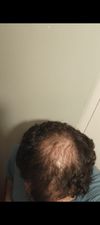
community Some progress pics, 26M, on oral Min (4mg), Dut (0.5mg) and biotin (4mg) almost 5 months in
A 26-year-old male shared progress photos showing hair improvement after nearly 5 months on oral Minoxidil (4mg), Dutasteride (0.5mg), and biotin (4mg). The photos show noticeable hair growth over time.