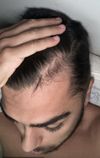
The user shared progress pictures showing hair improvement from September to December using topical finasteride 0.3% and minoxidil 6%. The treatment appears to be effective for hair loss.
The user is experiencing increased hair shedding and is considering switching from a topical solution containing minoxidil, finasteride, and tretinoin to oral minoxidil while continuing oral dutasteride. They are seeking advice on whether to make this switch or wait for the shedding to stabilize, and are concerned about potential side effects of oral minoxidil.
Koshine 826 (Pyrilutamide) is being used by several users to address hair loss, with mixed results on shedding and side effects. Some users report reduced shedding and no side effects, while others experience increased shedding and potential issues with libido and erectile dysfunction.
The user experienced significant hair regrowth using topical Minoxidil and Finasteride but had to stop due to high liver enzyme levels. They plan to pause treatment for a month to see if their liver values return to normal.
For hair loss, start with Finasteride, Minoxidil, Ketoconazole shampoo, and Microneedling. For severe cases, consider Dutasteride, oral Minoxidil, or hair transplants.
A female user is using a 5% RU58841 solution with 5 sprays daily and is concerned about potential reactions and the impact of wearing a bonnet. A male user mentioned using 1ml of the same solution daily via dropper.
User discusses using topical Minoxidil twice daily for 4 months, then switching to once daily with oral Dutasteride and Minoxidil. They also mention microneedling monthly and are unsure if oral Minoxidil is better than topical.
User seeks help calculating dosages for liquid minoxidil (2% and 5%) and generic finasteride (5mg tablets) to treat hair loss. They want to know how to achieve 2.5 mg of minoxidil and 1 mg of finasteride per ml of solution.
The user is questioning if their hair is regrowing or thinning while using dutasteride 0.5mg, minoxidil 2.5%, vitamin tablets, and ketoconazole shampoo. They are seeking opinions on their hair loss treatment progress.
The user improved their hair loss using finasteride, switched to dutasteride, micro-needling, Nizoral shampoo, and changed from topical to oral minoxidil, resulting in thicker hair, eyebrows, beard, and body hair. Commenters are impressed with the transformation, some mistaking the before and after photos for different people, and the user reports no side effects from the treatments.
The conclusion of the conversation is that the user, Lead_Tasso, is expressing gratitude for the community's help in restoring their confidence in treating hair loss. They have been using finasteride (fin) and minoxidil (min) and have also been taking hair and nail vitamins.
The post and conversation discuss whether Minoxidil causes facial aging, with some users reporting no side effects and attributing negative effects to possible allergic reactions. The original poster suggests more research is needed to confirm any connection between Minoxidil and facial aging.
User shared 8-month hair loss treatment progress using topical fin/min, topical dut, mk677, RU, and microneedling. They experienced watery semen as a side effect but saw significant improvement in hair growth.
Carpronium chloride 5% is a hair growth treatment in Japan, considered less effective than minoxidil or finasteride. Some users report moderate success with it, but its efficacy is not well-verified.
Male androgenetic alopecia is commonly treated with topical minoxidil and oral finasteride, both requiring continuous use. Other options include hair restoration surgery, dutasteride, light therapy, and camouflaging agents.
The user is considering switching from finasteride to dutasteride and possibly using oral minoxidil to address hair loss, having seen some progress with topical treatments and microneedling. They are also contemplating a hair transplant in the future and seeking advice on obtaining medications in Italy.
The conversation discusses switching from a dermaroller to a dermastamp for microneedling, with recommendations on technique and frequency to avoid bleeding. The user also uses minoxidil and dutasteride for hair loss treatment.
A user experienced negative side effects, including low libido and lack of motivation, after using finasteride for hair loss and felt better after stopping it. Others shared similar experiences with finasteride and dutasteride, while some reported no side effects, showing varied individual responses.
A woman with androgenetic alopecia uses Dutasteride and Bicalutamide but feels devastated due to increased sensitivity to DHT. She considers wigs, Minoxidil, and seeks advice on options like spironolactone, hair transplants, and therapy.
A 41-year-old man shared his two-year progress using finasteride for hair regrowth, noting significant improvement but wishing he had started earlier. He plans to add oral minoxidil to his routine despite concerns about potential side effects, emphasizing the importance of starting treatment early to combat hair loss.
The user is experiencing hair loss and is using finasteride while addressing low ferritin and copper levels. They are concerned about continued hair shedding and are advised to correct vitamin deficiencies and wait for finasteride results after 12 months.
The conversation discusses adjusting the isopropyl alcohol, propylene glycol, and water ratios in a topical finasteride solution for better scalp comfort and less dandruff. The user considers using 20ml IPA, 25ml PG, and 15ml water in a 60ml bottle, moving away from mixing finasteride with topical minoxidil.
The user is considering adding liposomal dutasteride to their hair loss treatment, which currently includes topical finasteride and minoxidil. They are exploring different concentrations and application frequencies to enhance hair retention and are also planning to continue using Rogaine.
The user experienced noticeable hair regrowth using topical minoxidil and a dermaroller within a month. They are advised to consider DHT inhibition for lasting results.
Many regret delaying hair loss treatments like finasteride and minoxidil, impacting self-esteem and dating. Additional treatments include scalp micropigmentation and hair transplants, with some experiencing side effects or high costs.
A user shared their hair loss treatment routine, which includes minoxidil, finasteride, ketoconazole, biotin, dutasteride, and RU58841. They recommend starting with topical sprays and mentioned using a new combo spray from Hims UK.
A female in her late 30s experienced hair thinning due to health issues and treatments, including antibiotics and stress. She started using minoxidil, biotin, and vitamins from **hers** and is currently dealing with shedding and possible weight gain.
People discuss using Tretinoin for both skin anti-aging and improving hair loss treatments. They mention combining Tretinoin with Minoxidil to enhance its effectiveness for hair growth.
A user shared their positive experience with a hair transplant of 3500 grafts, showing significant improvement in appearance after 5 months. They underwent the procedure at Heva Clinic in Istanbul for $2,300 USD, which included aftercare, and attributed their hair loss to both genetics and traction alopecia from tight hairstyles.